|
Interstitial Infill
and Urban Catalyst
Site Context
and Massing Strategy
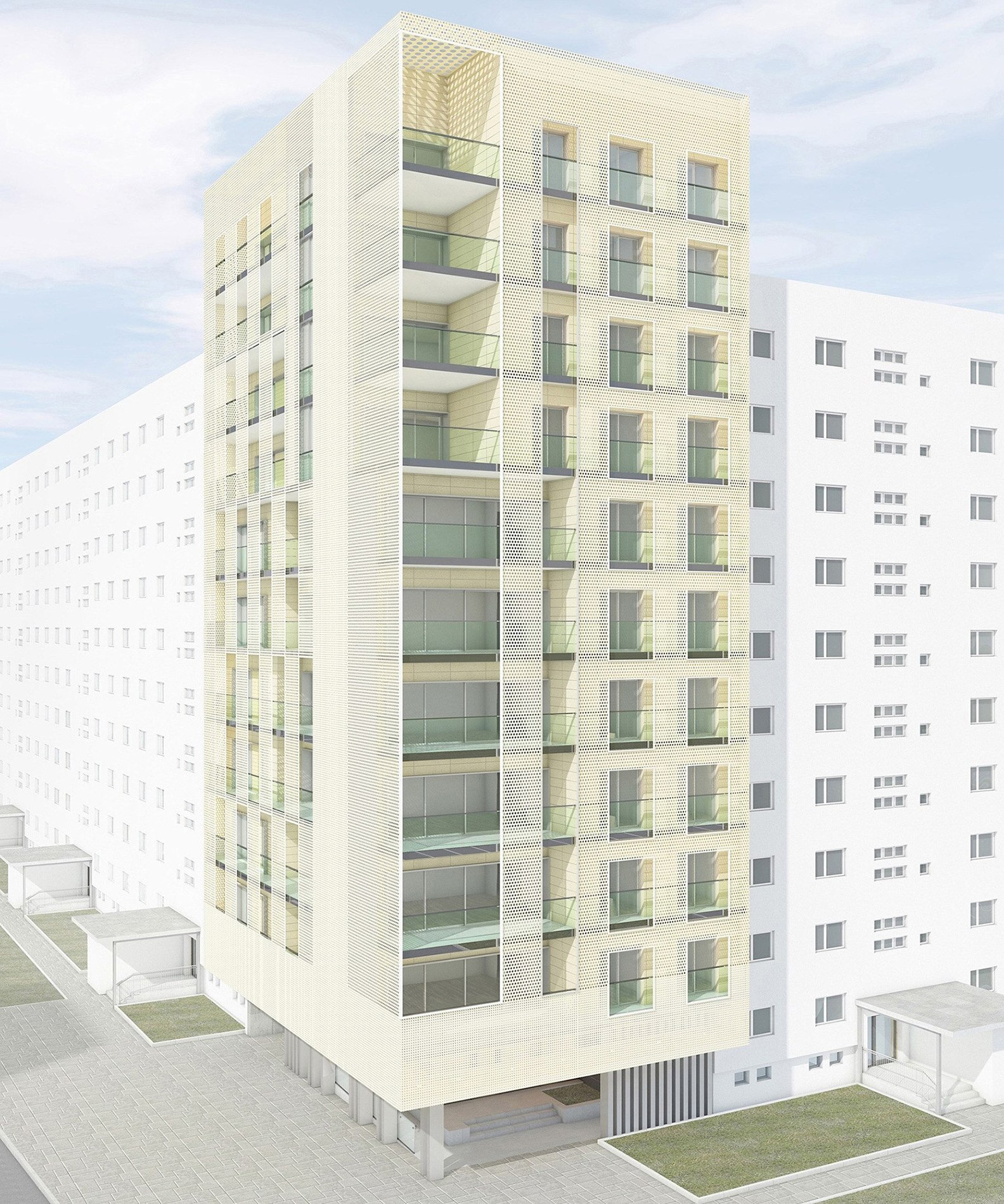
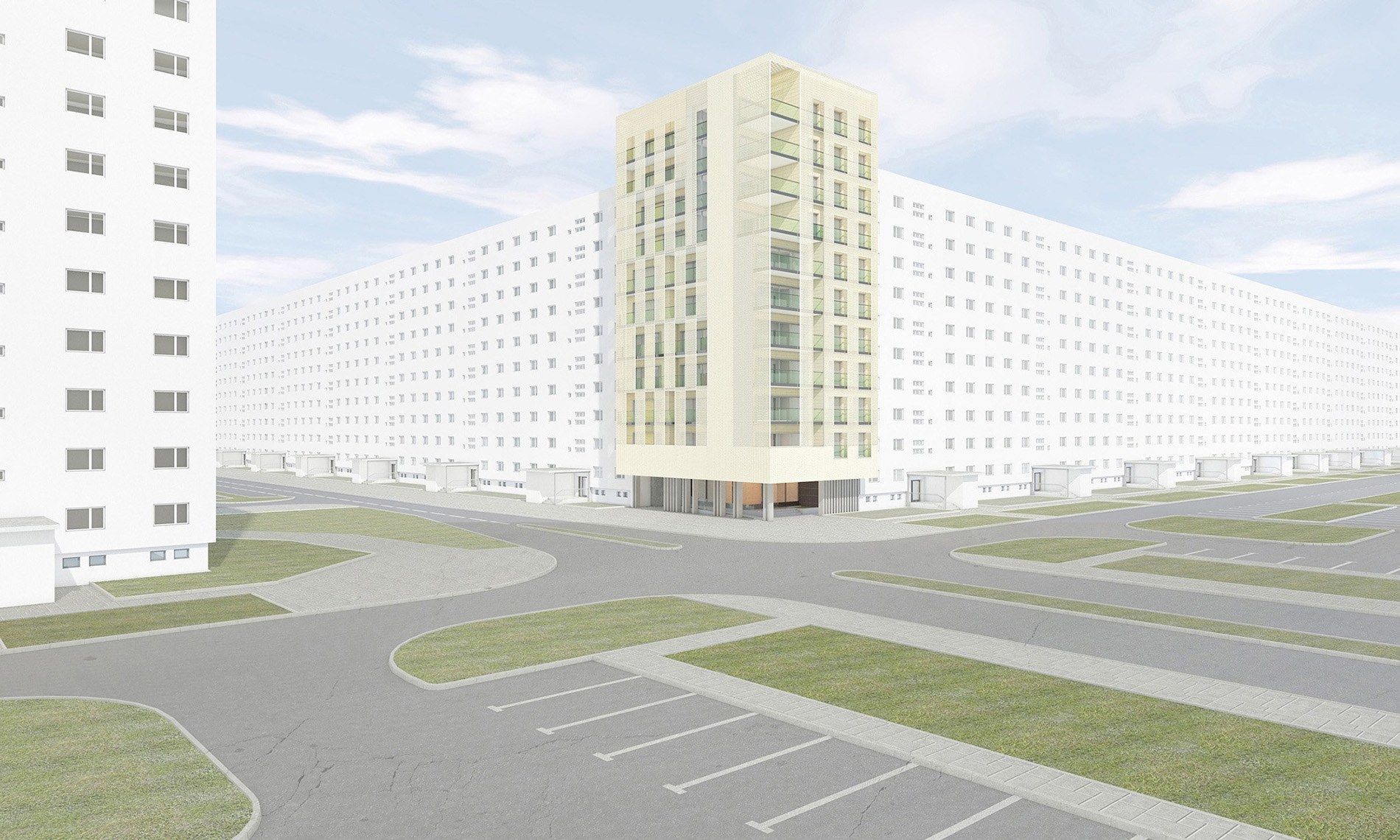
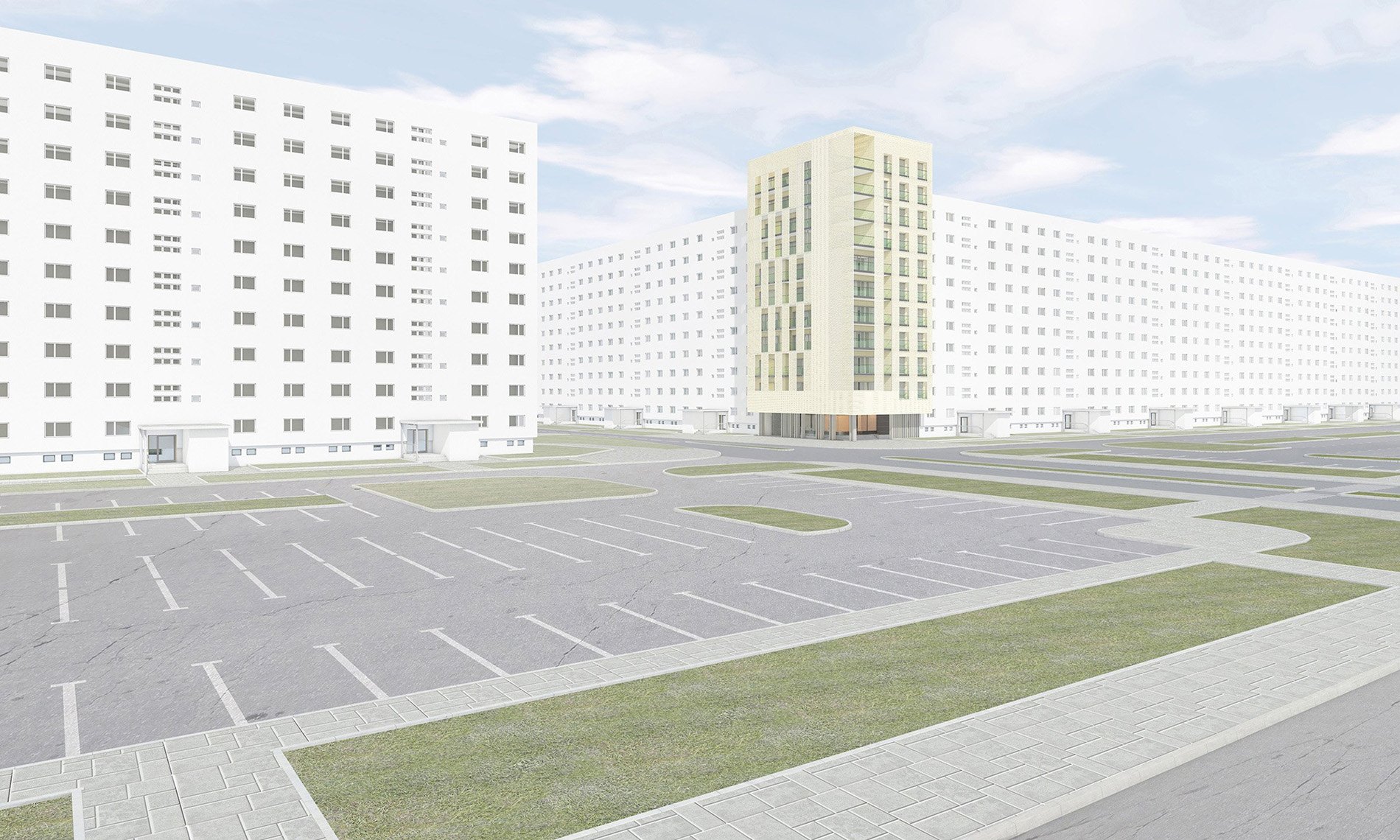
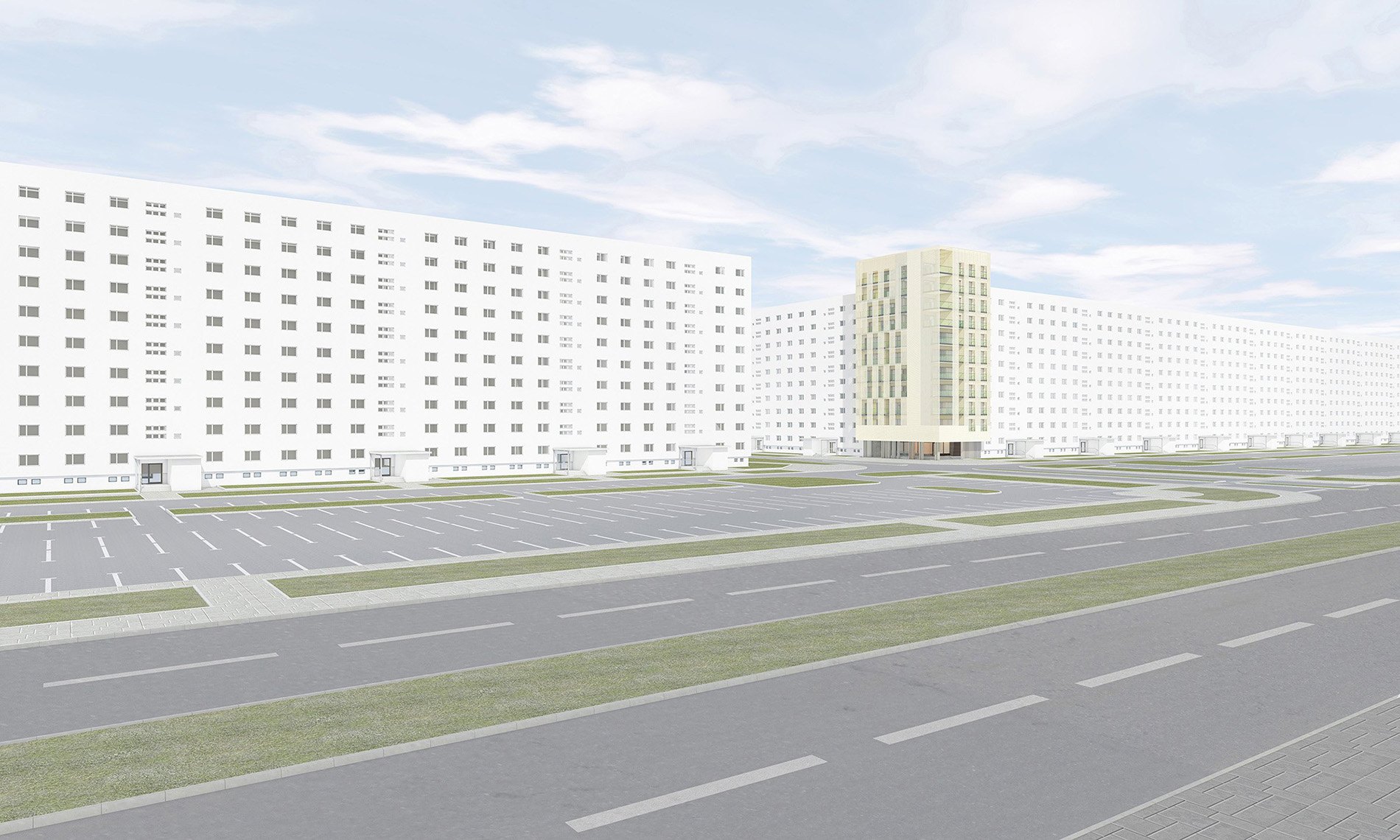
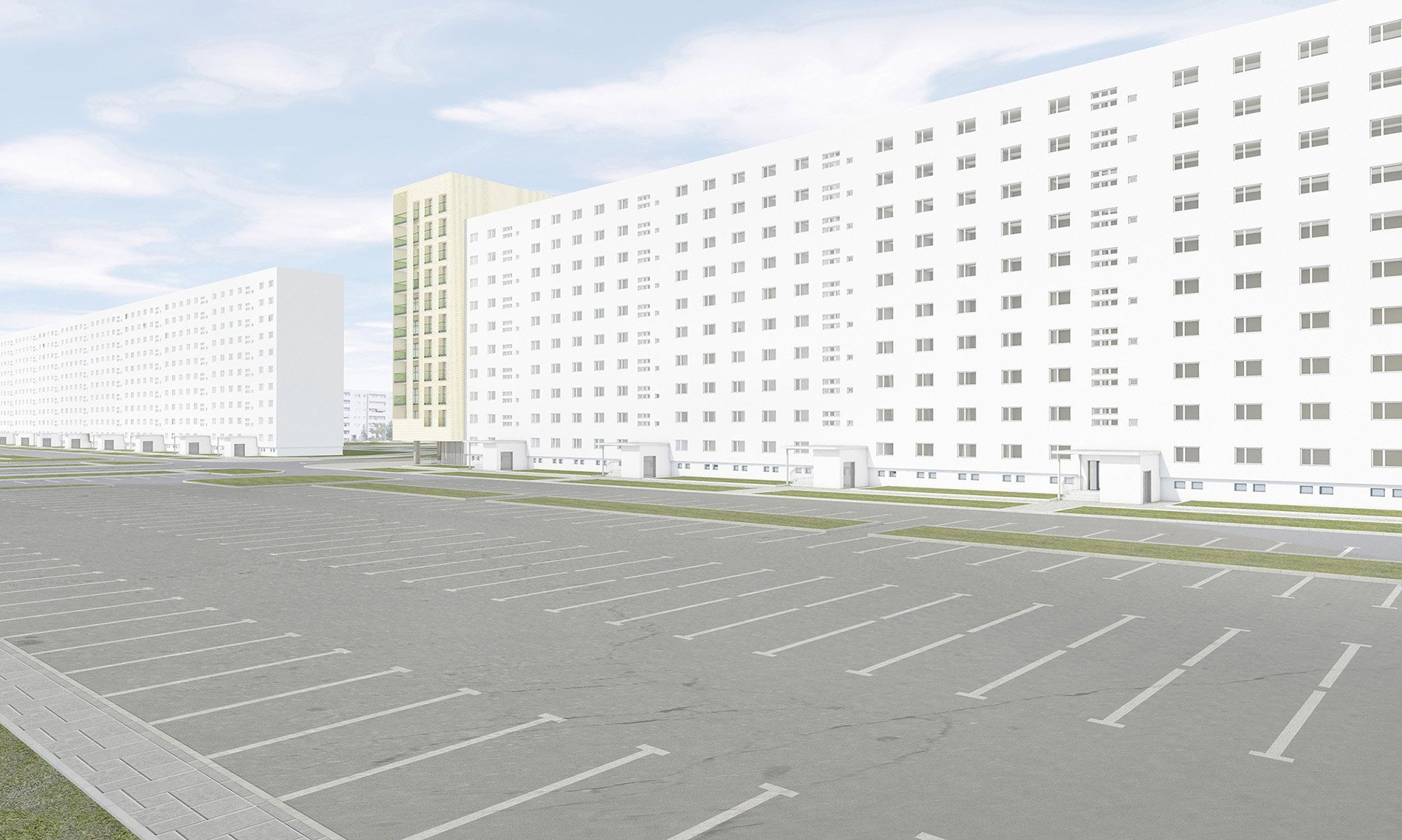
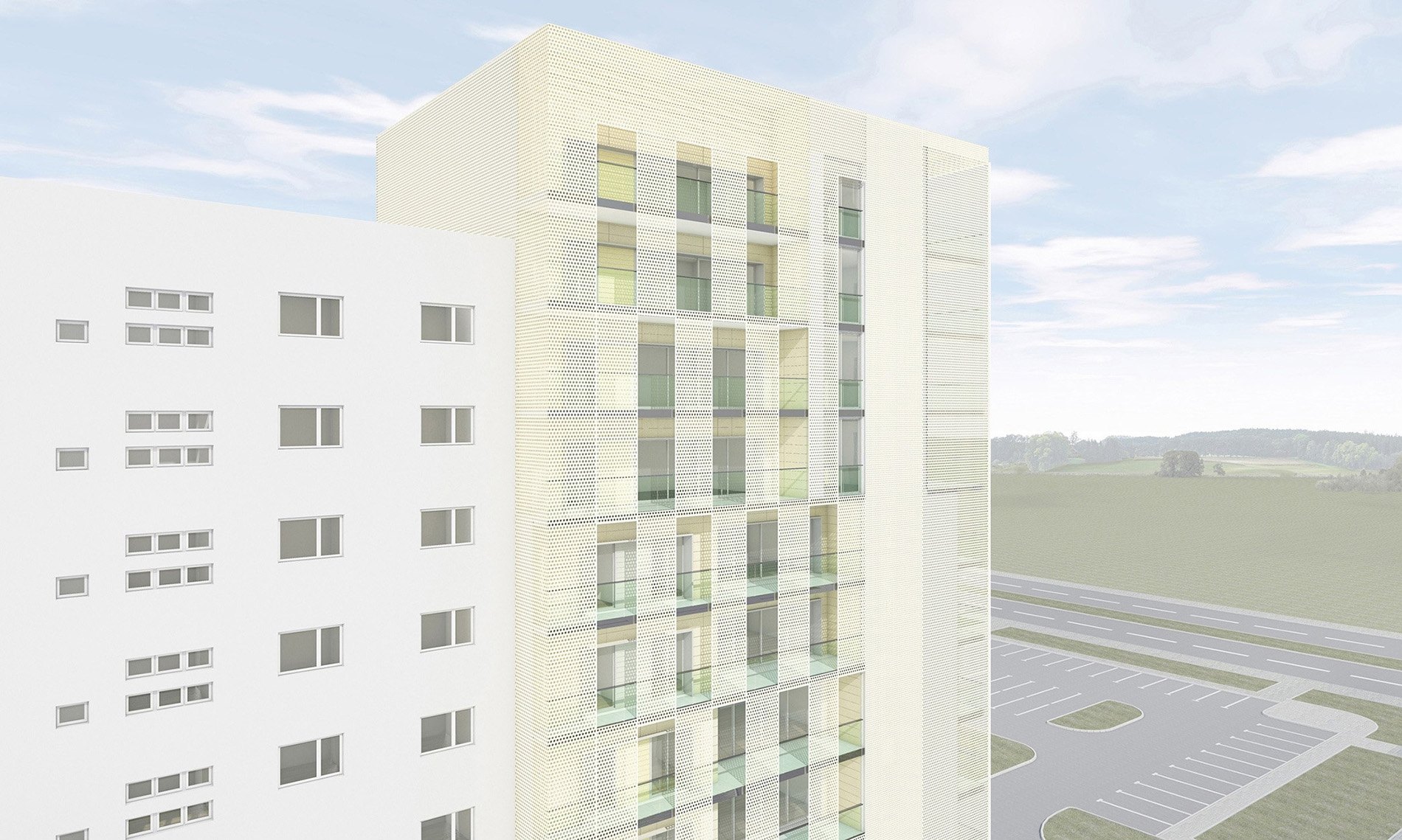
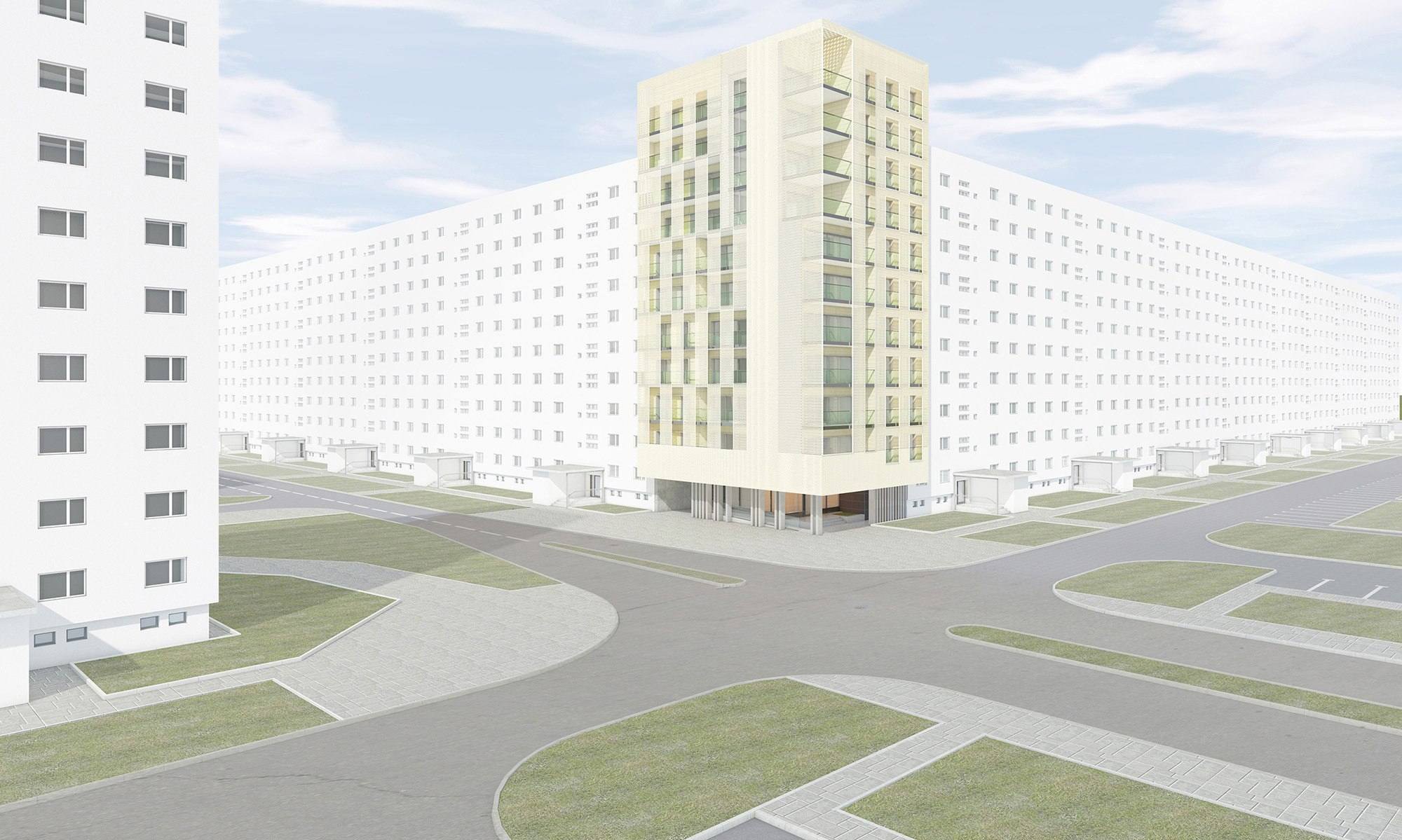
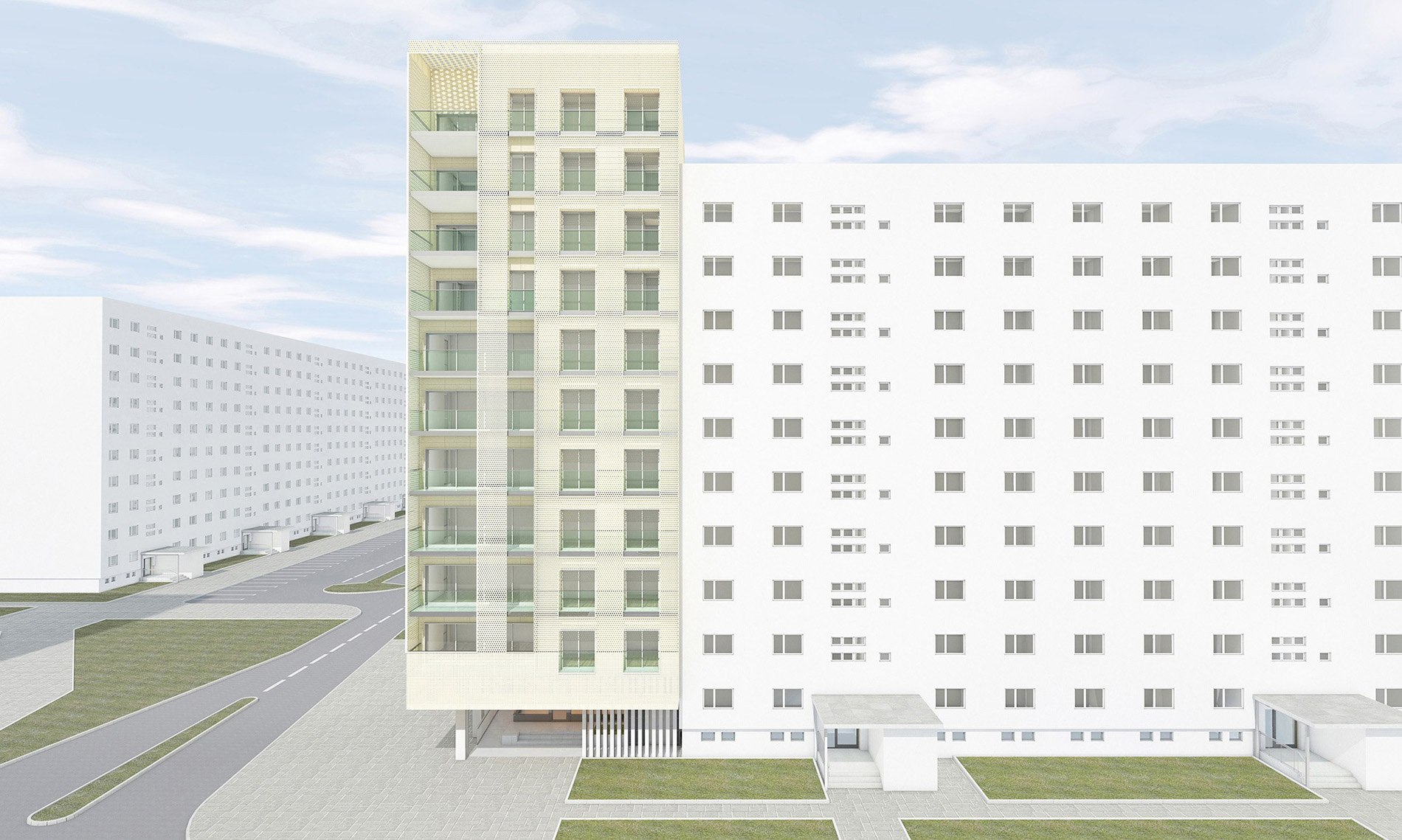
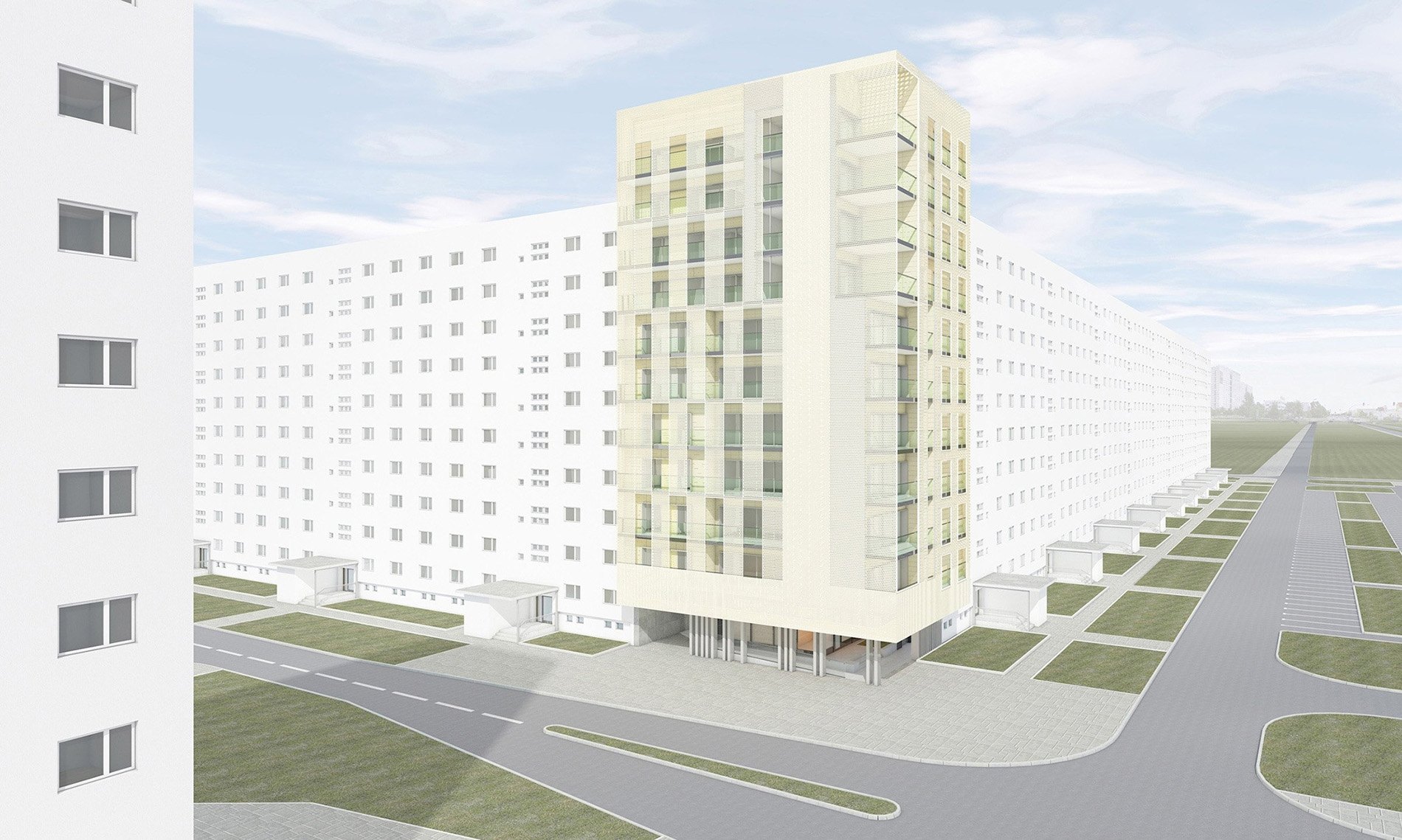
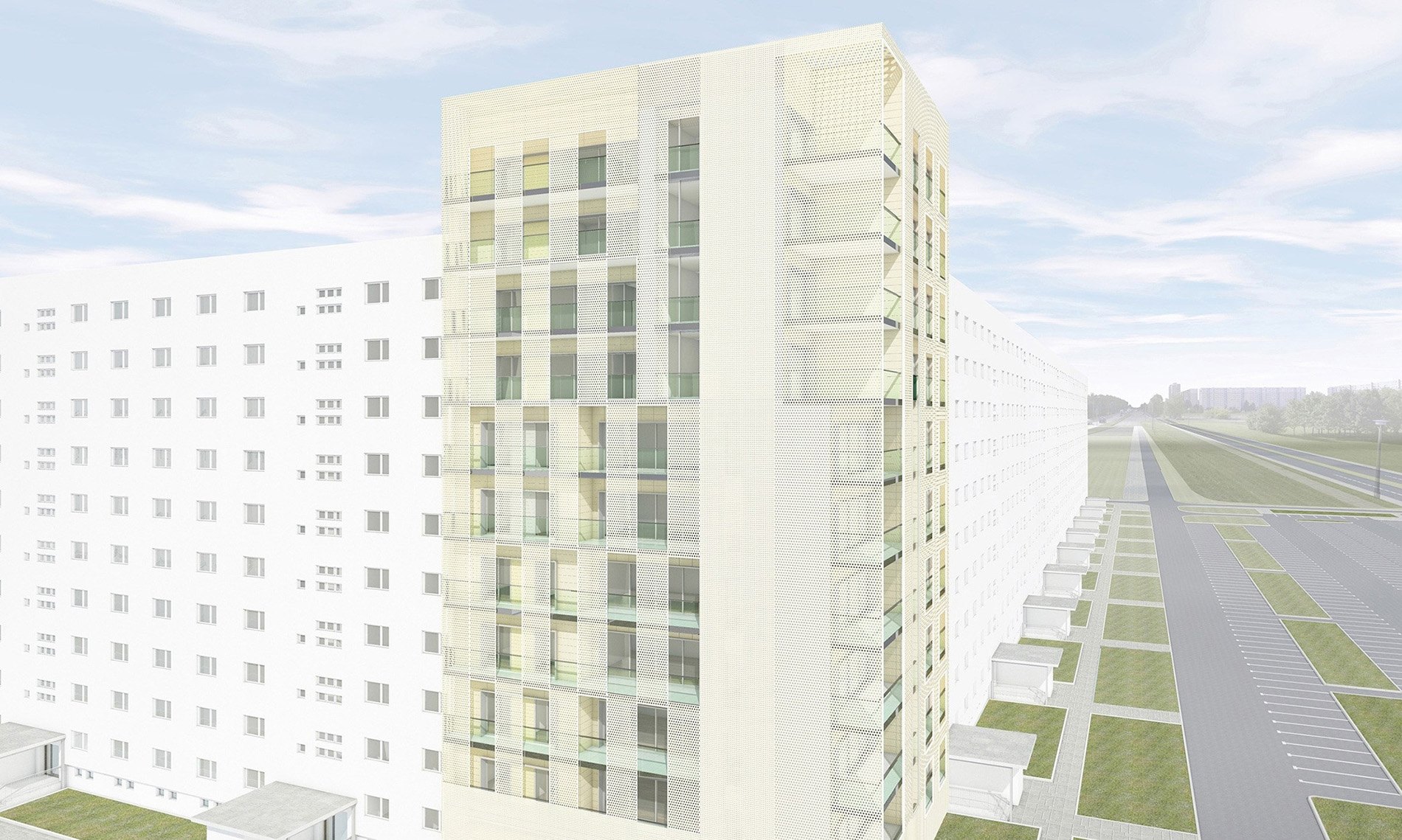
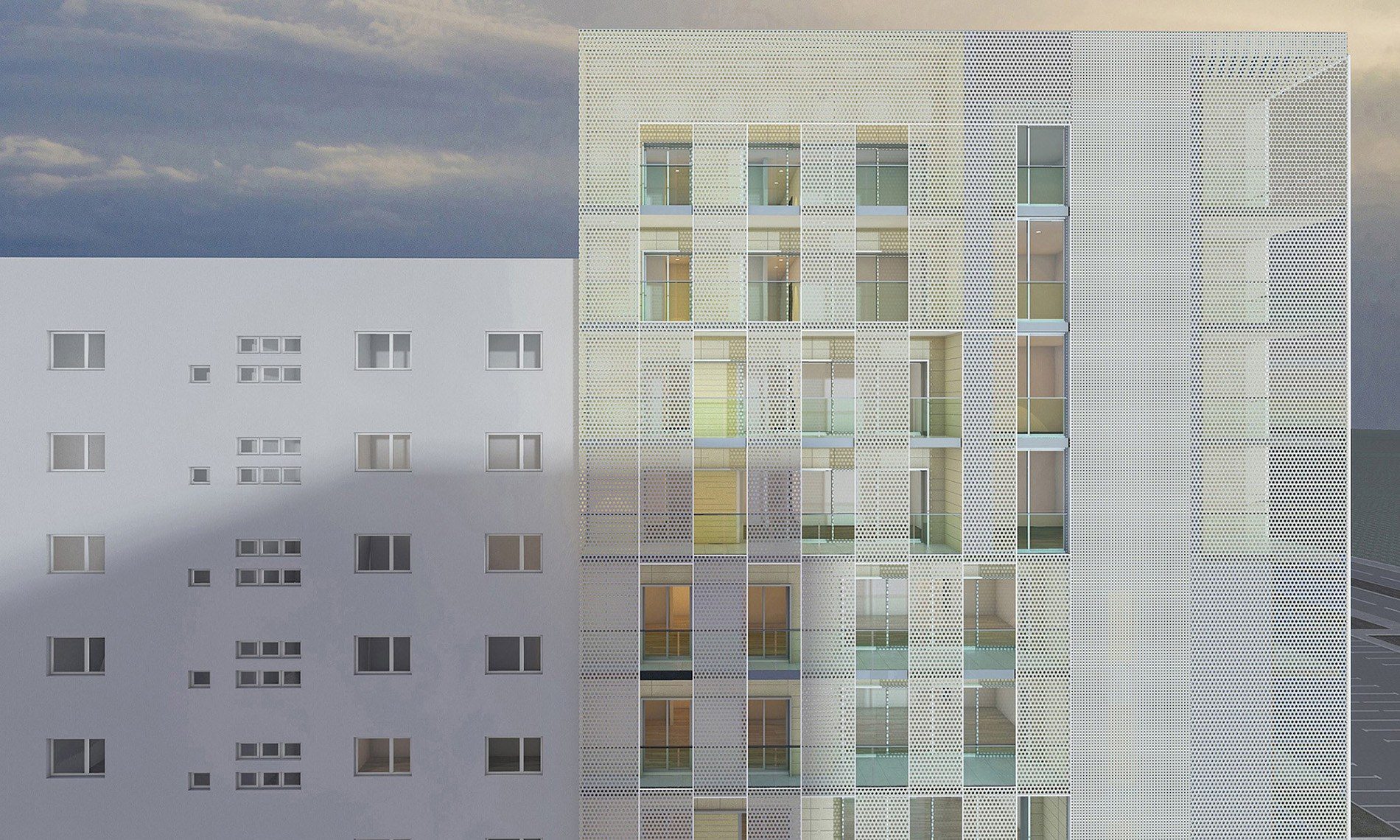
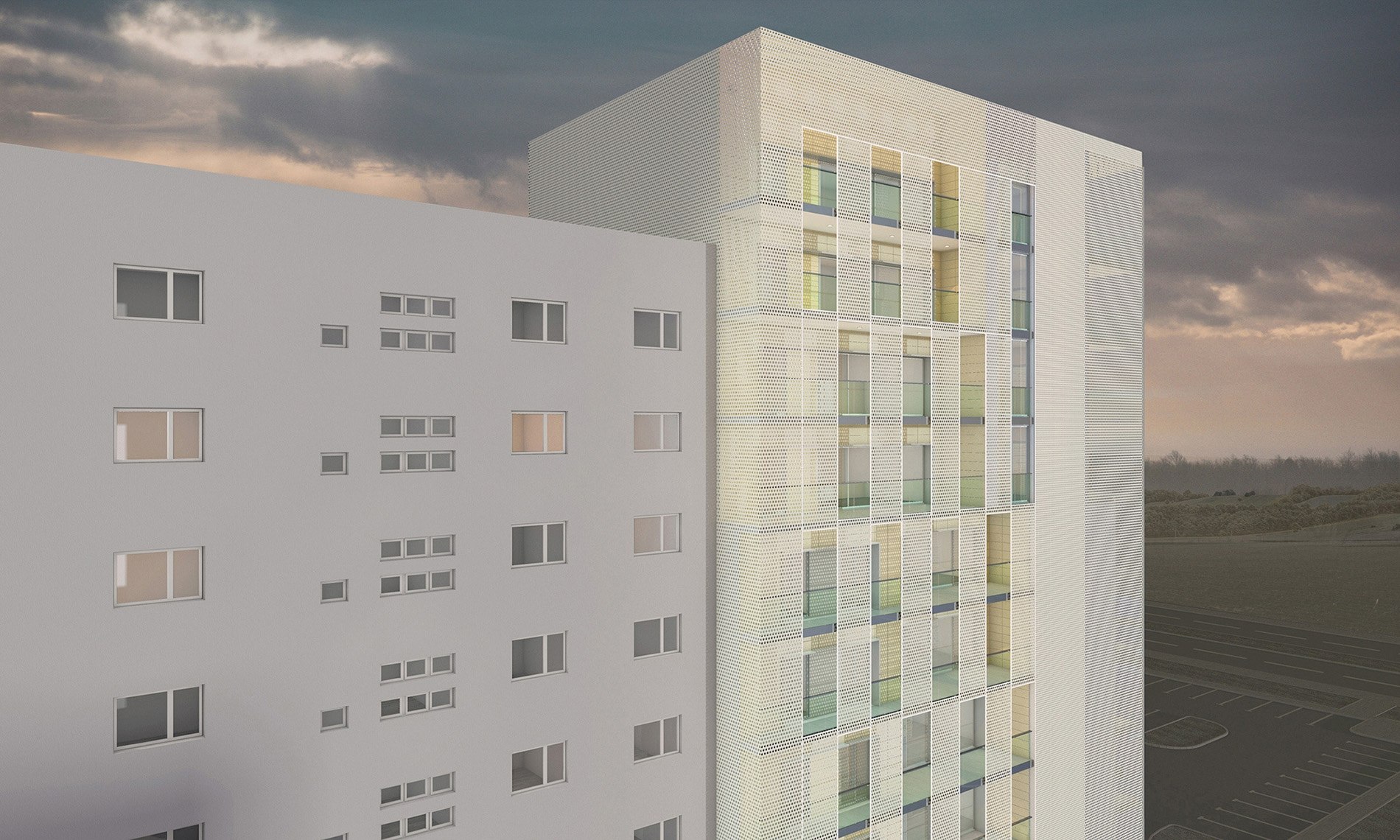
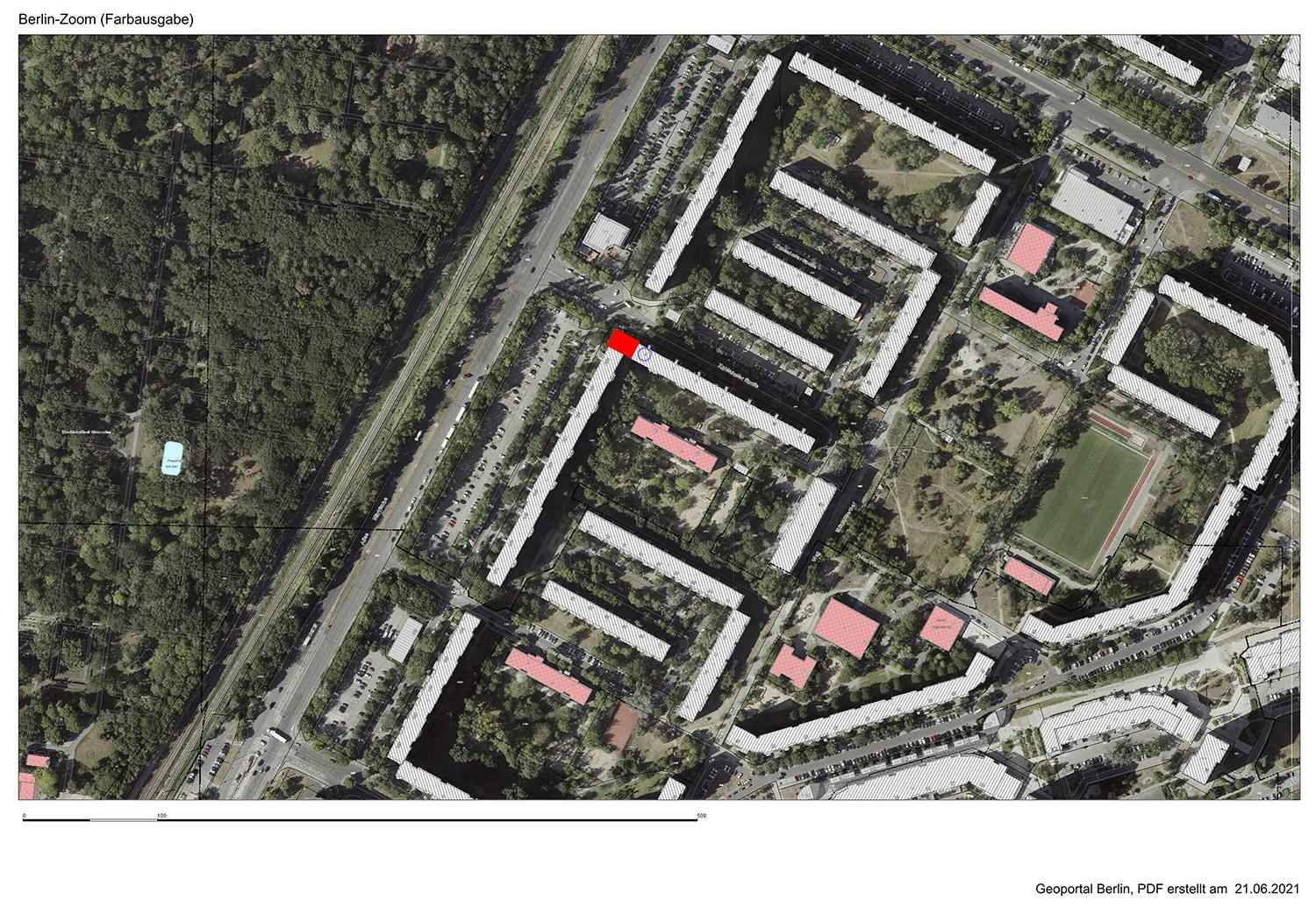
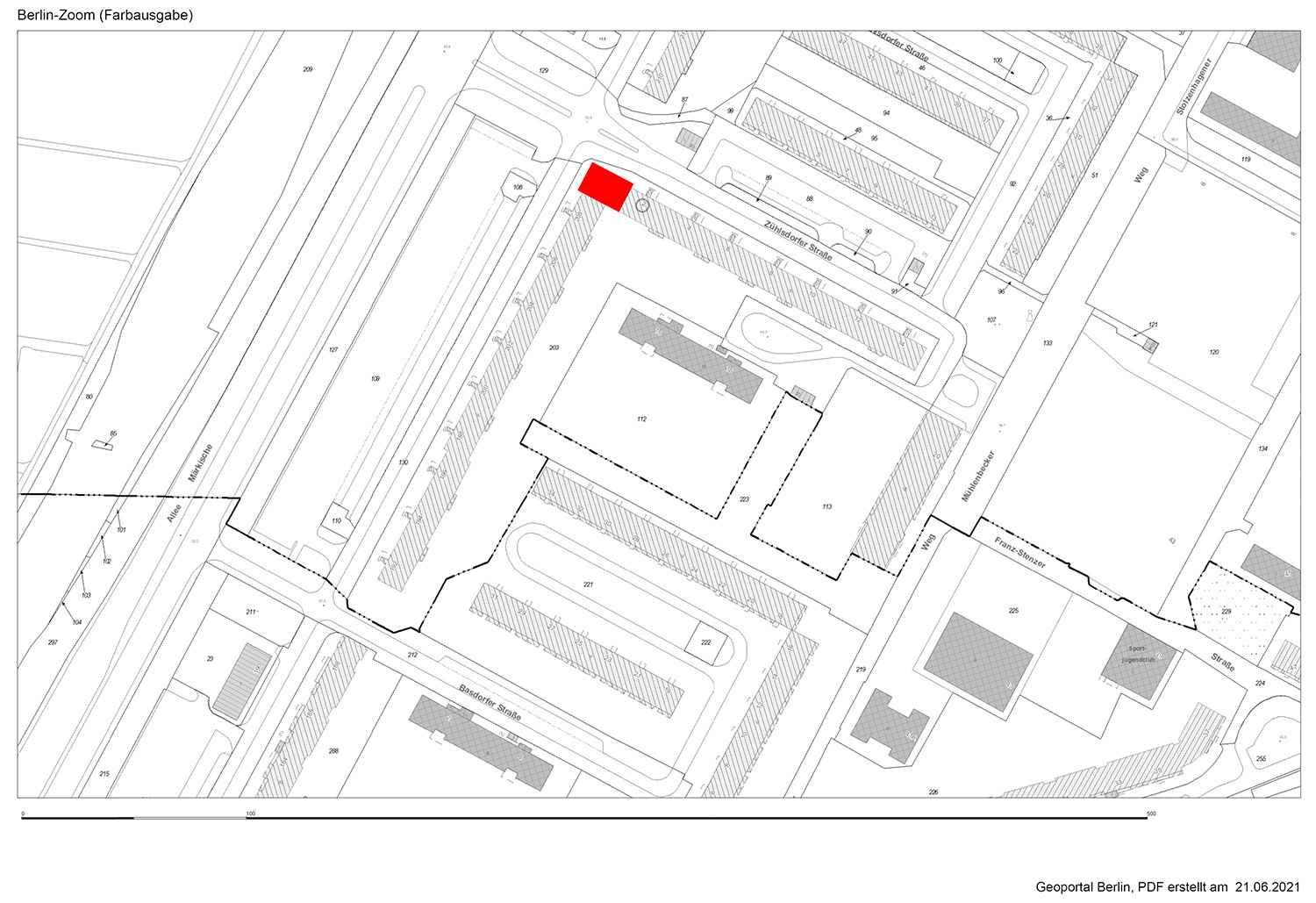
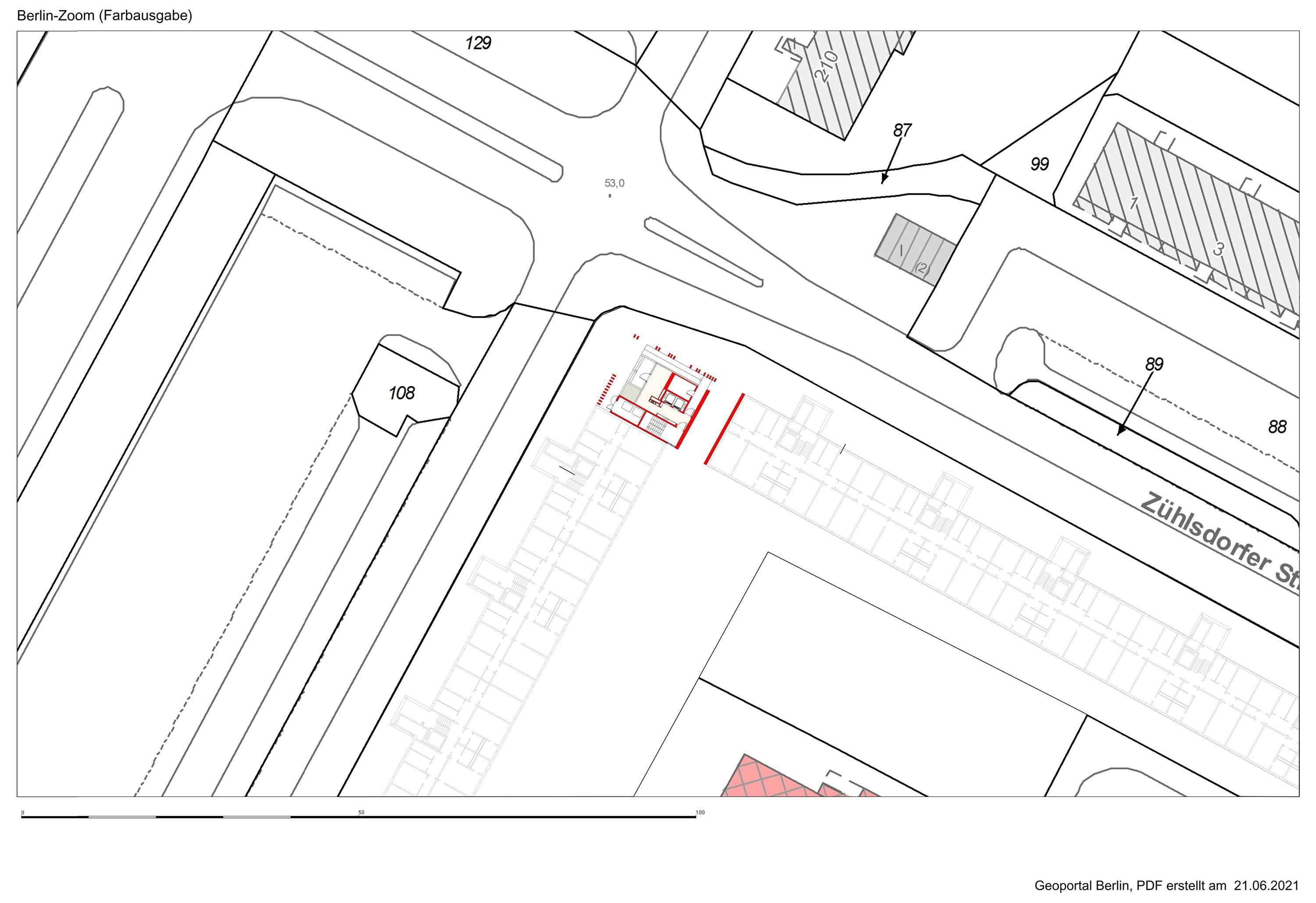
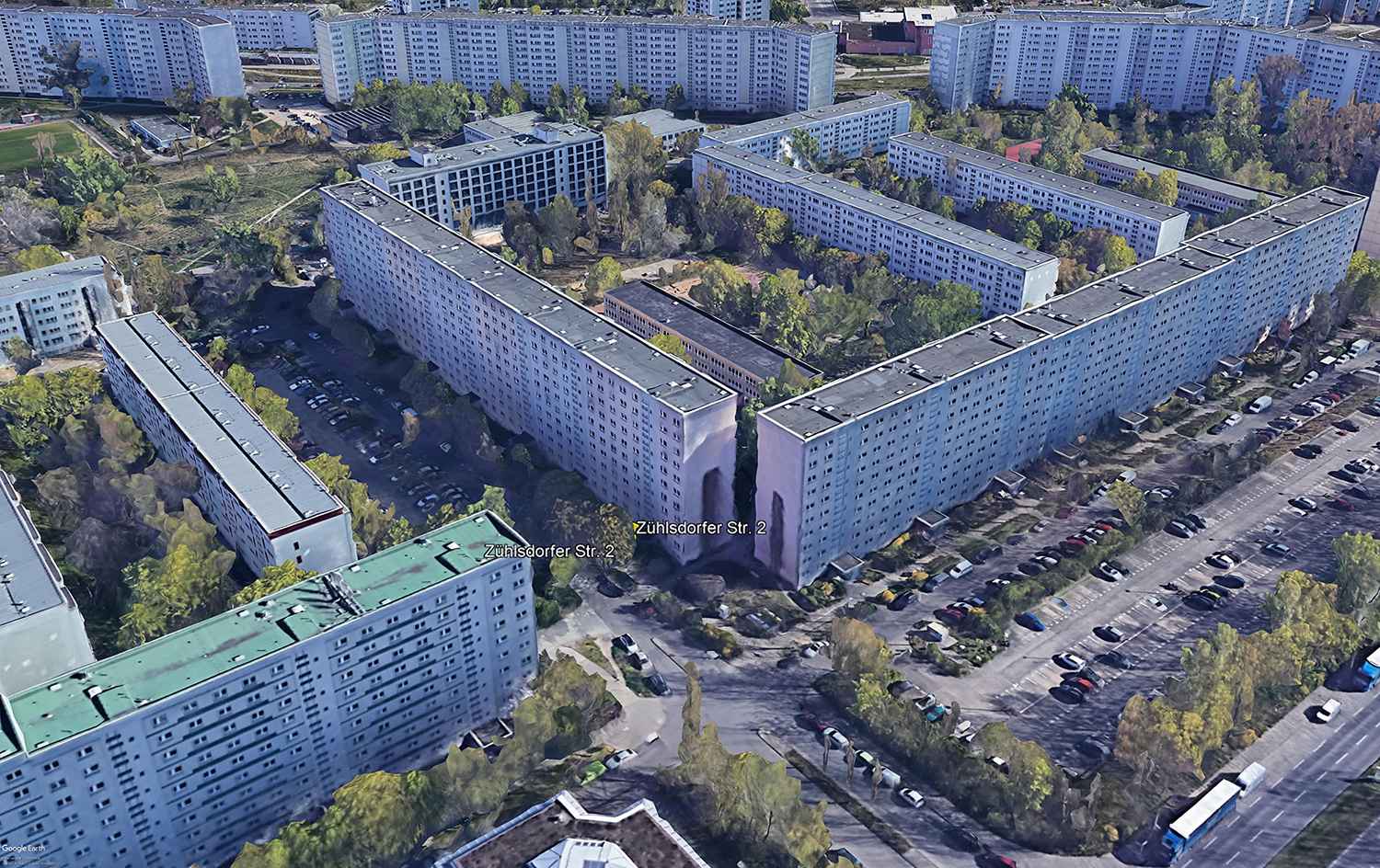
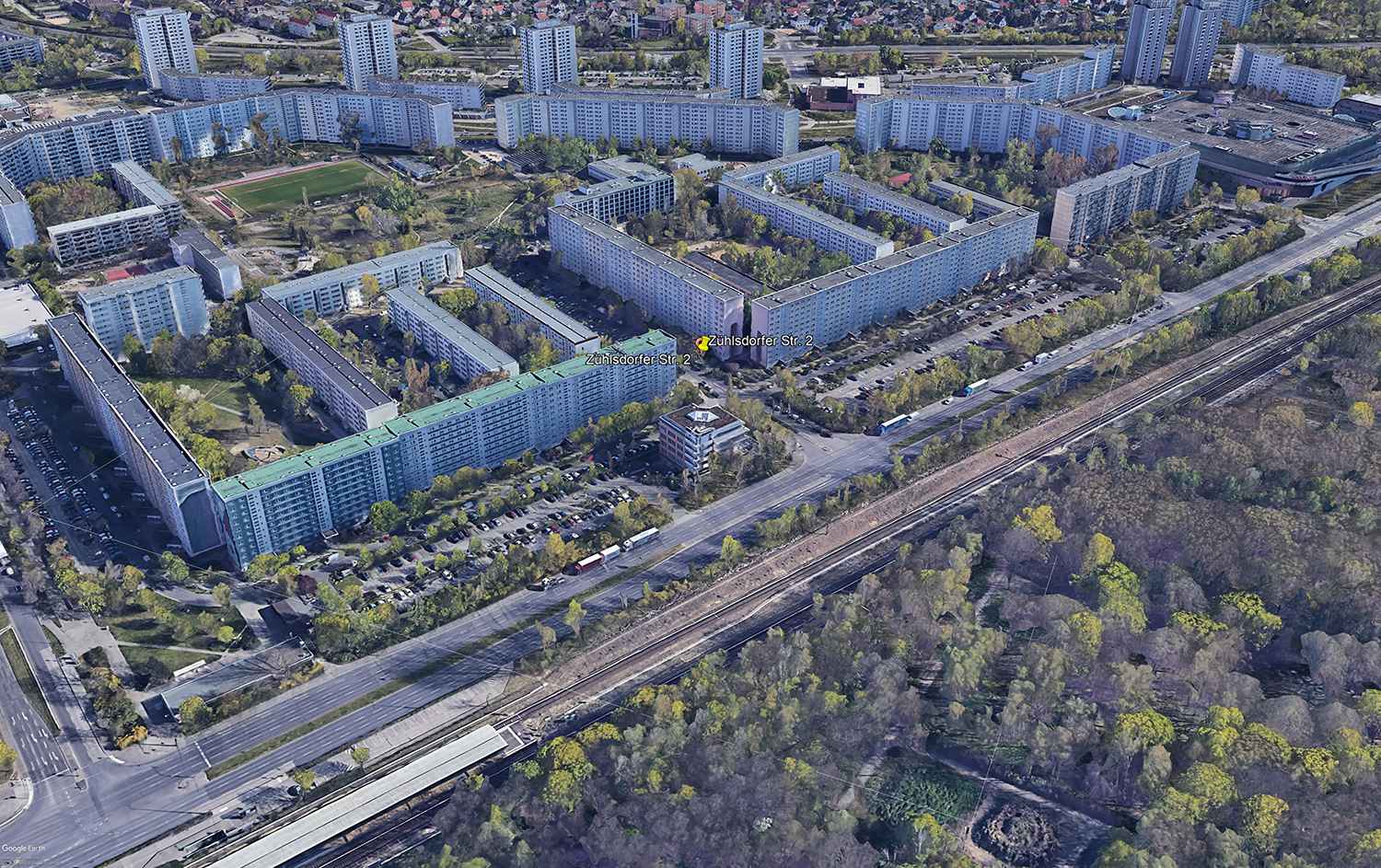
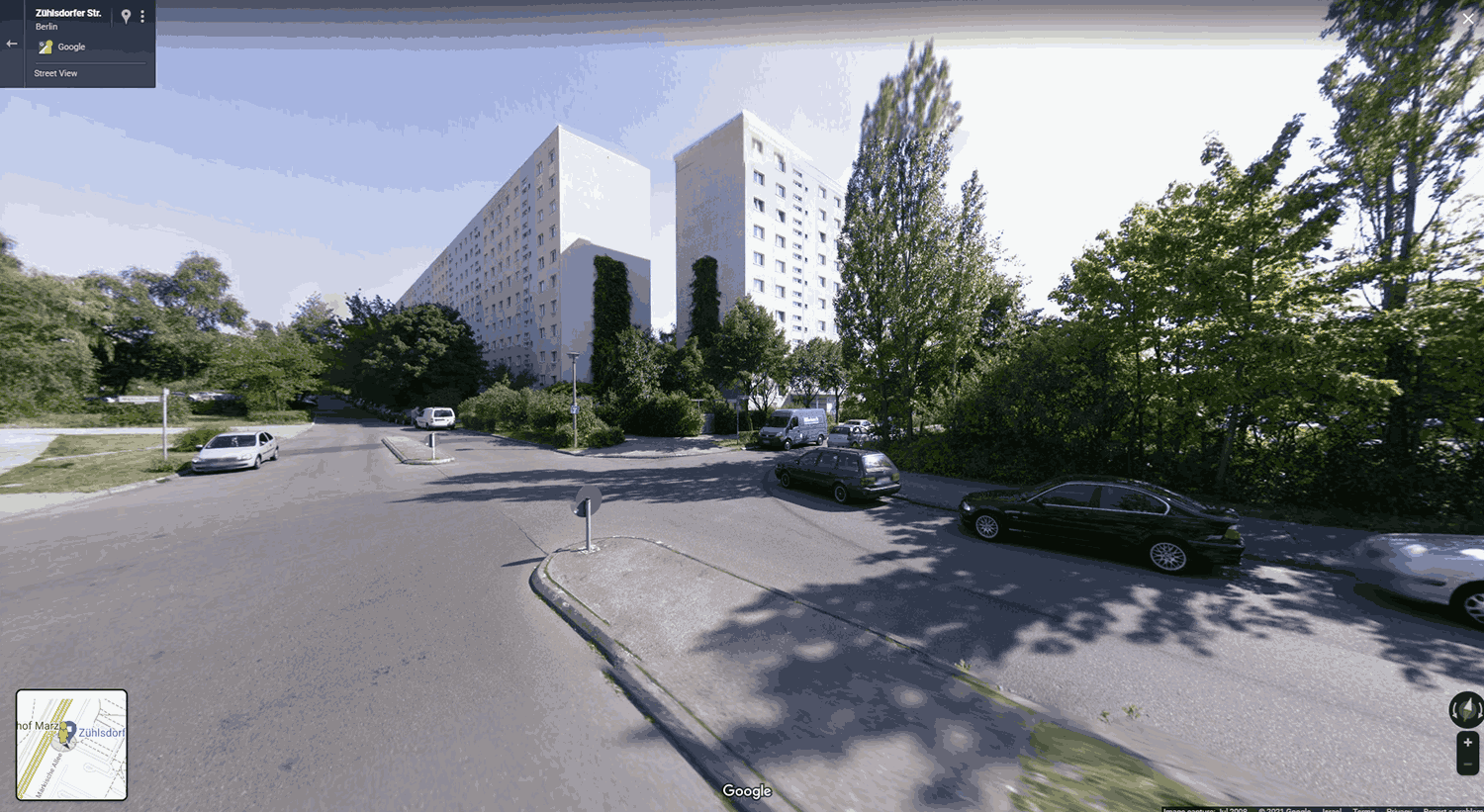
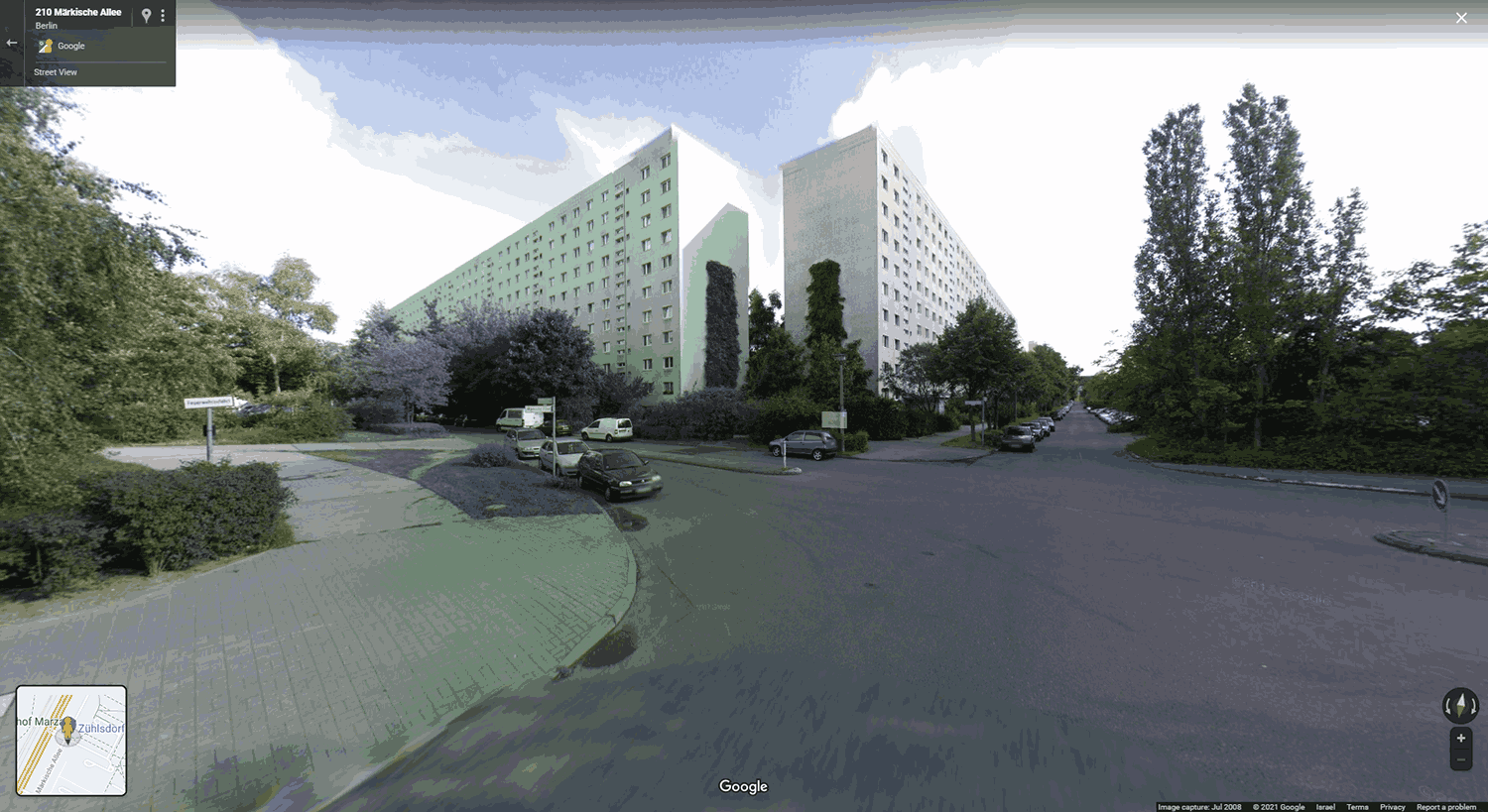
The proposed intervention occupies the interstitial airspace defined by the blank gable walls of the existing ten-story, QP-71 series mass-housing blocks. Functioning as an urban infill, the architecture establishes a direct physical dialogue with its host structures. By integrating seamlessly into the established street wall, the primary elevation either sits strictly flush with the existing facade datum or strategically projects outward to articulate a definitive, tectonic corner anchor.
Contextual Symbiosis
and Ground Plane Permeability
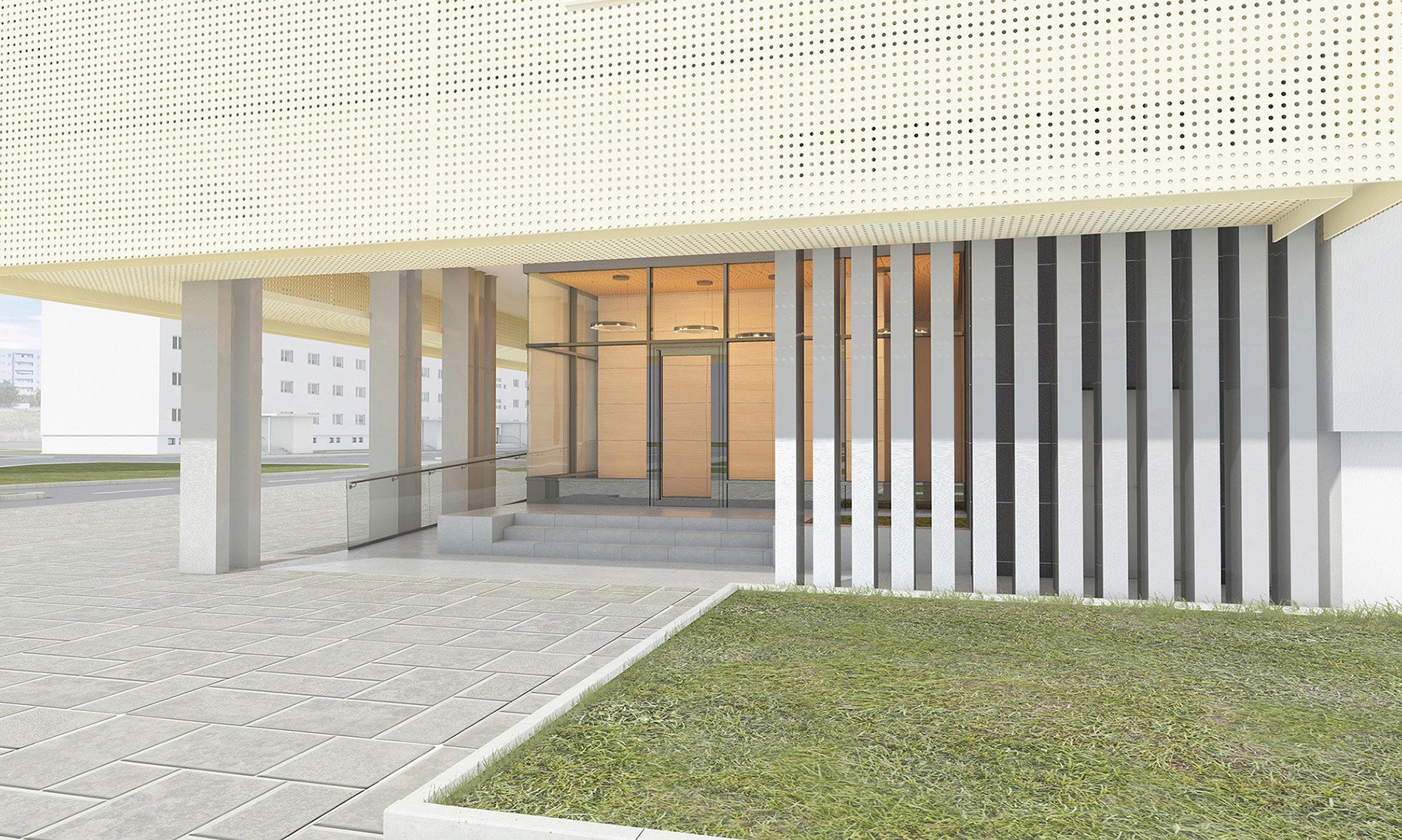
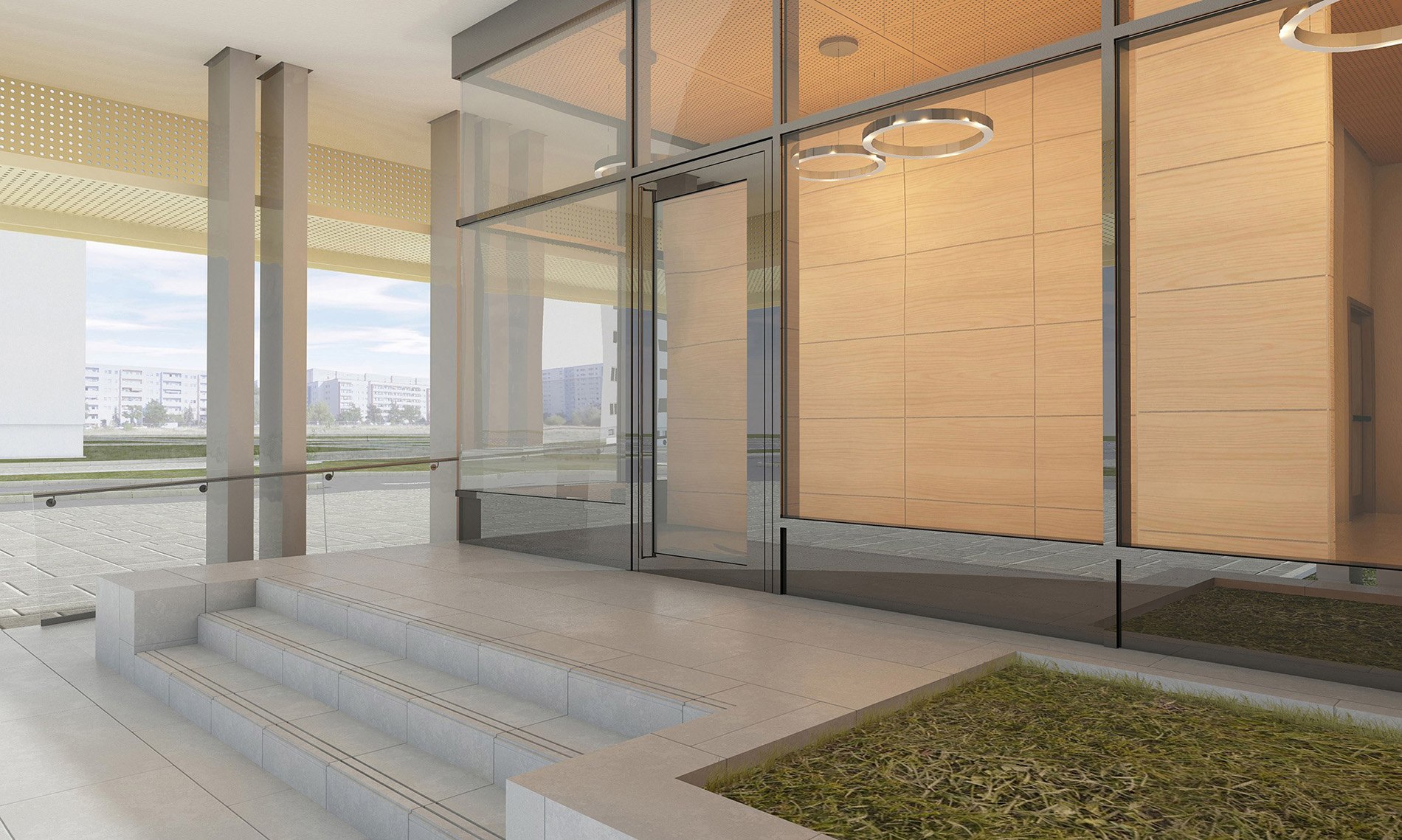
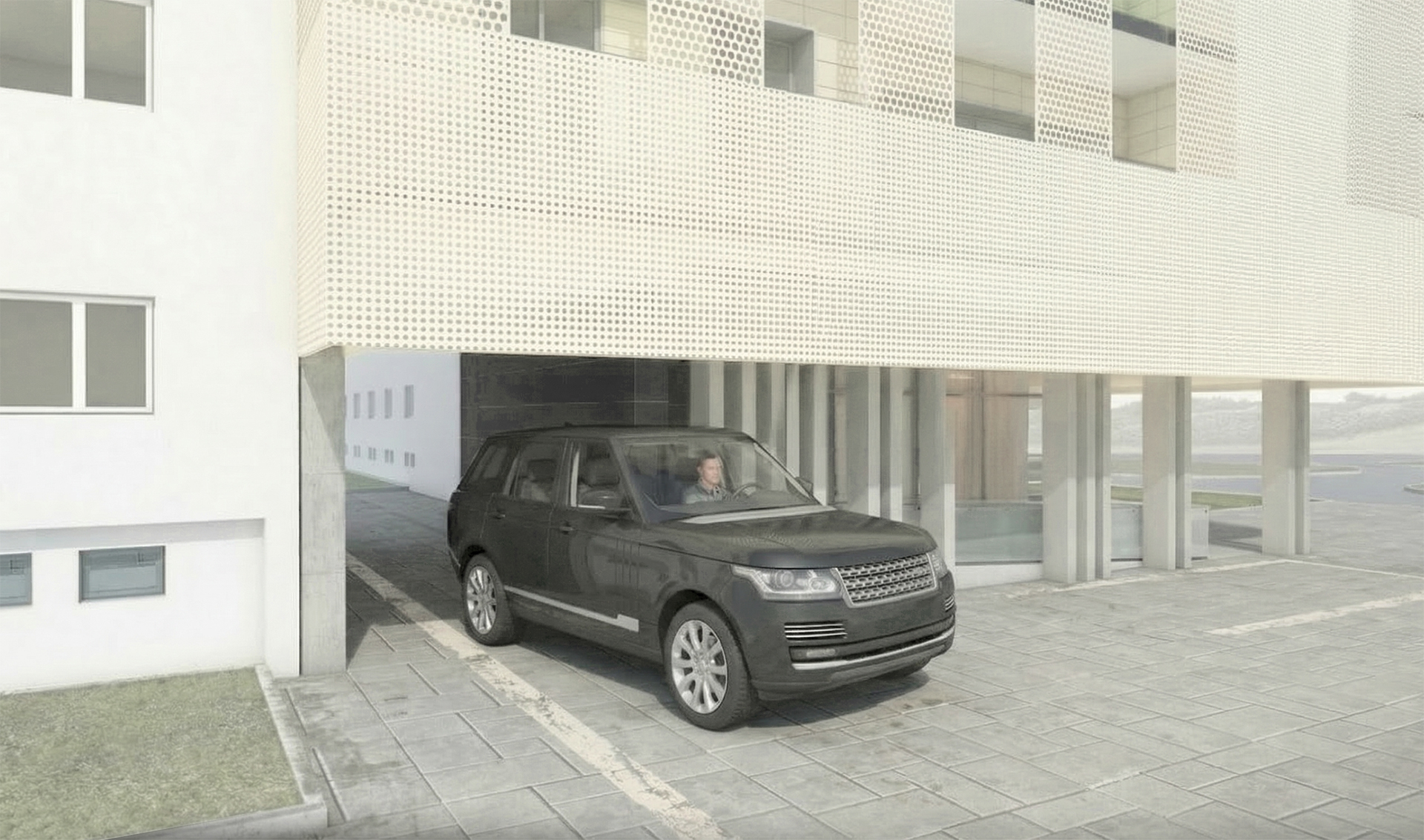
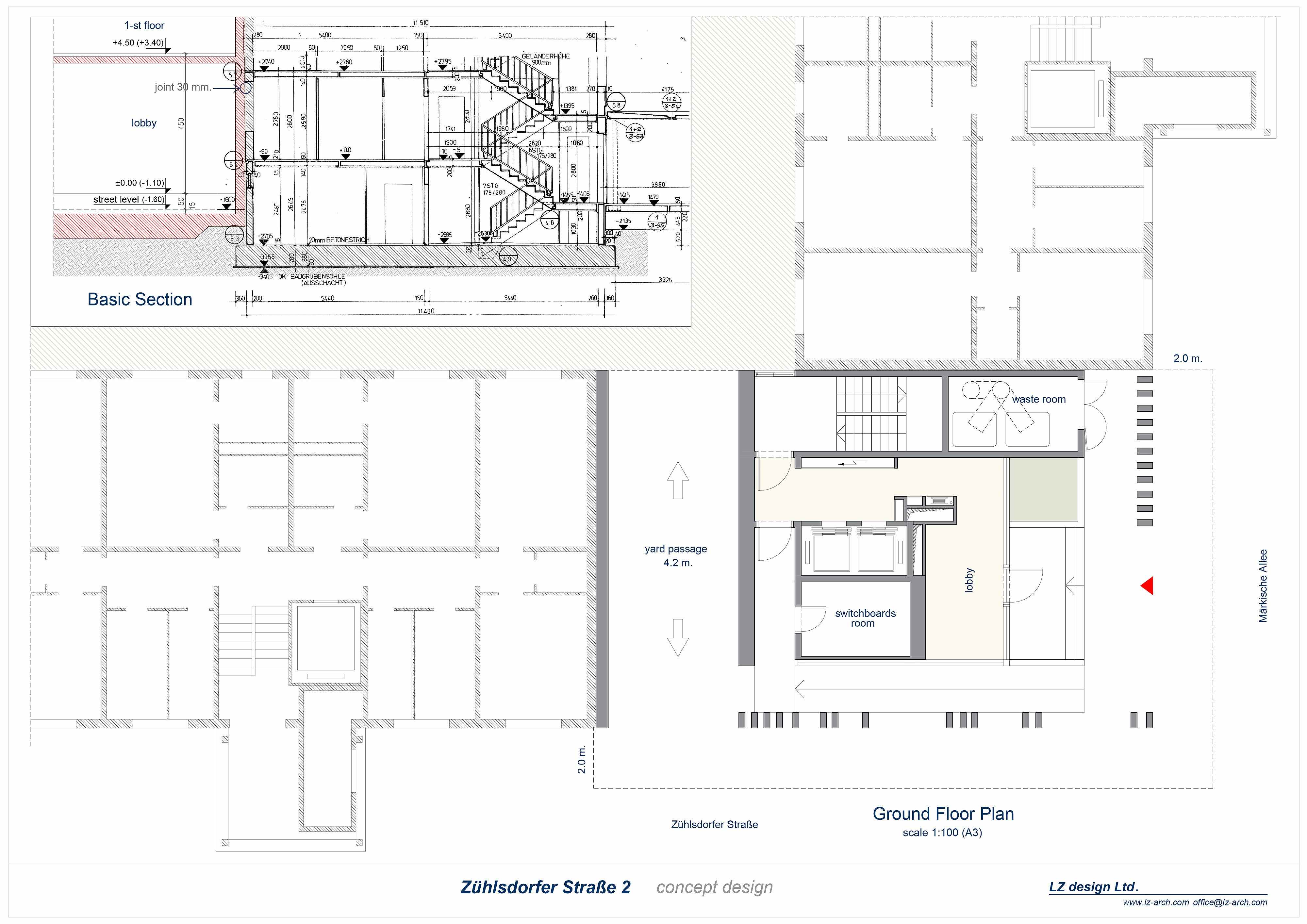
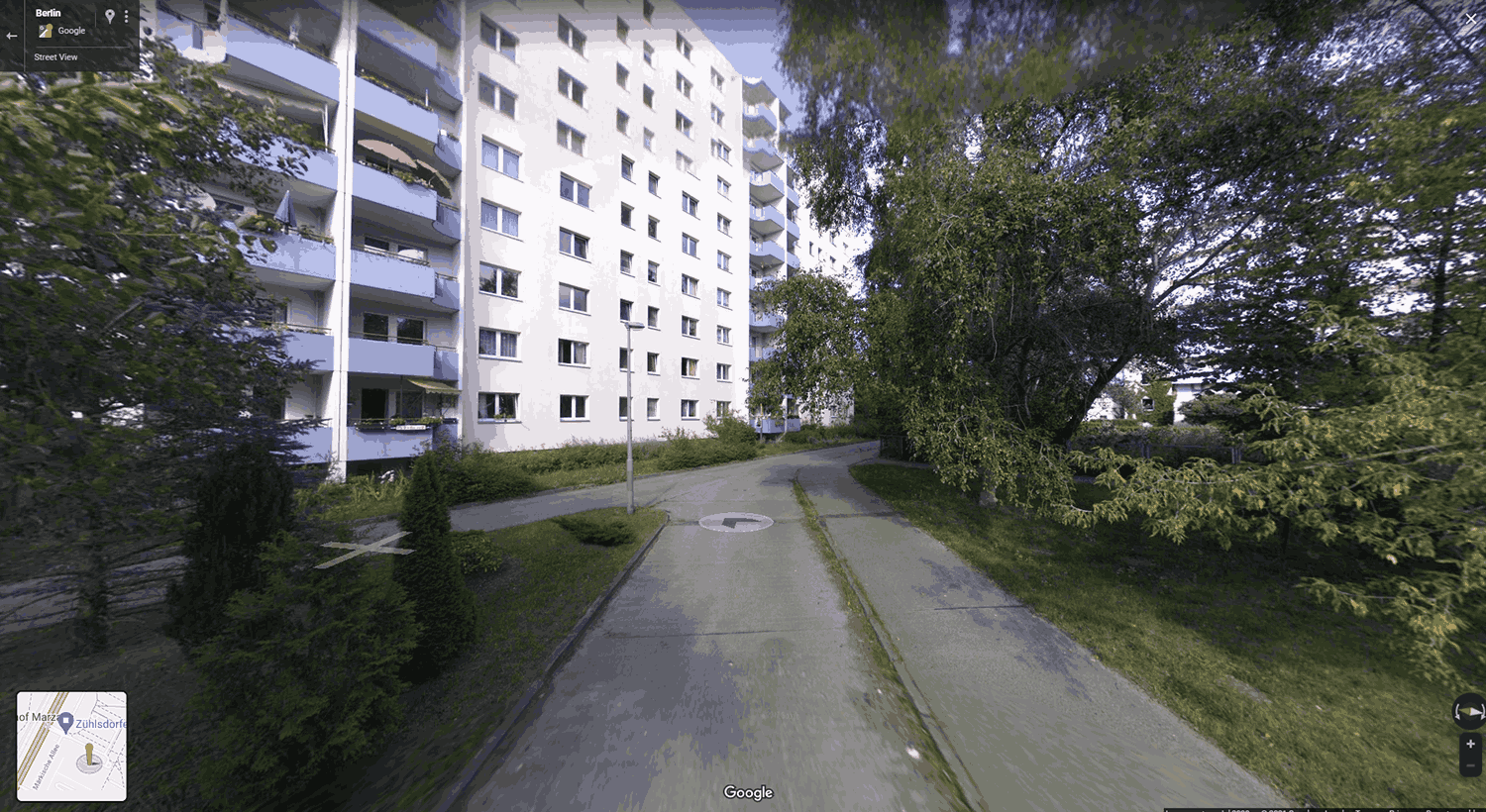
A primary driver of the design was to ensure a non-invasive relationship with the parent structures. By strictly adhering to the volumetric boundaries of the existing blocks, the new insertion preserves the microclimatic integrity of the neighbouring dwellings, ensuring no disruption to existing solar access or natural cross-ventilation patterns. At grade, the building footprint is deliberately recessed. This approach creates a highly permeable threshold, maintaining an expansive, unobstructed passageway into the internal courtyard to facilitate vital pedestrian circulation and emergency vehicle egress.
Urban Impact
and Placemaking
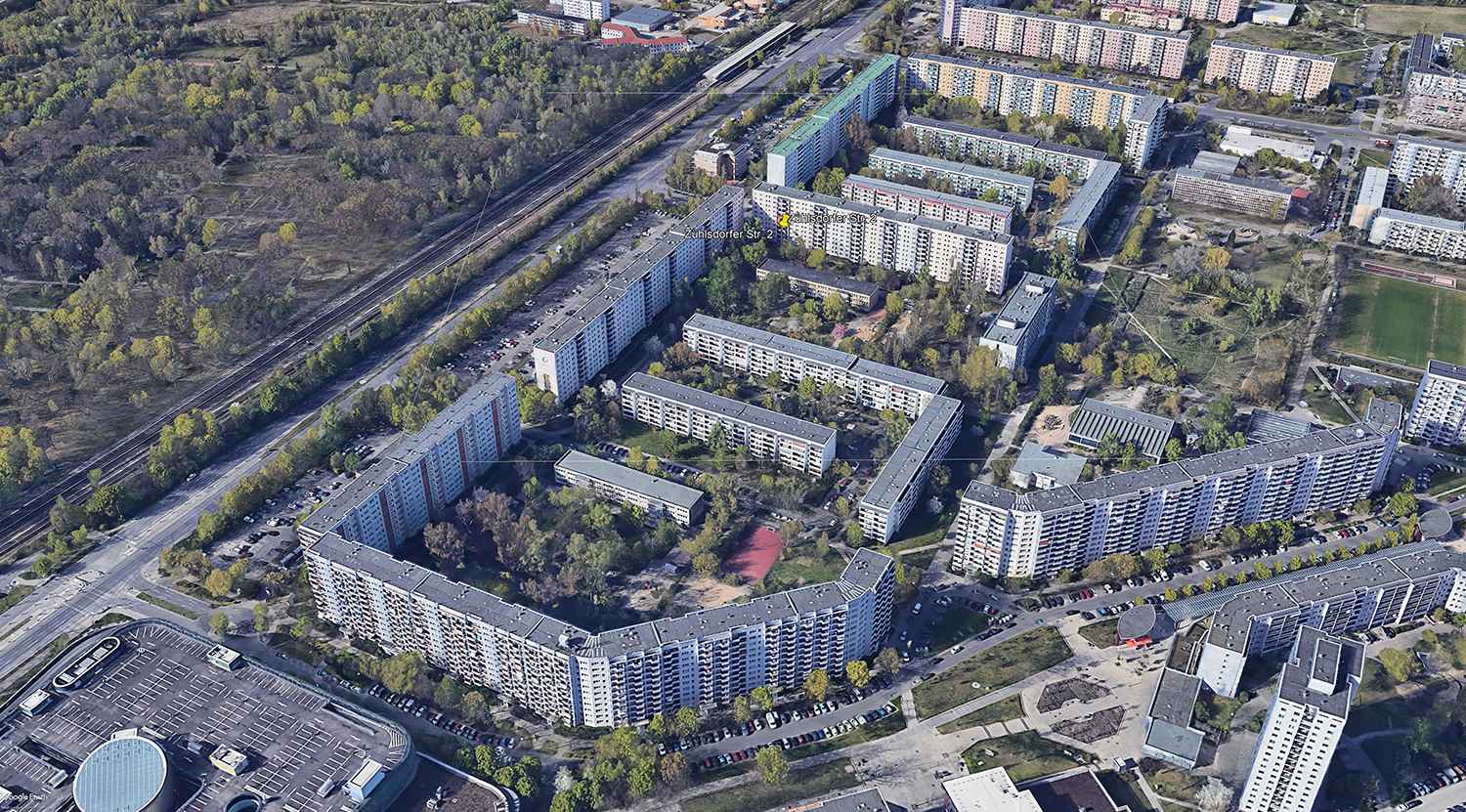
At the macro scale, the intervention operates as an urban catalyst. Recognizing the monolithic scale of the parental 150-to-190-meter-long linear blocks, the new architecture serves as a distinct, rhythmic punctuation. By disrupting this visual monotony, the building introduces a compelling focal point that re-scales the public realm, ultimately consolidating the disjointed adjacent blocks into a highly legible, unified residential ensemble.
Spatial Programming
and Typologies
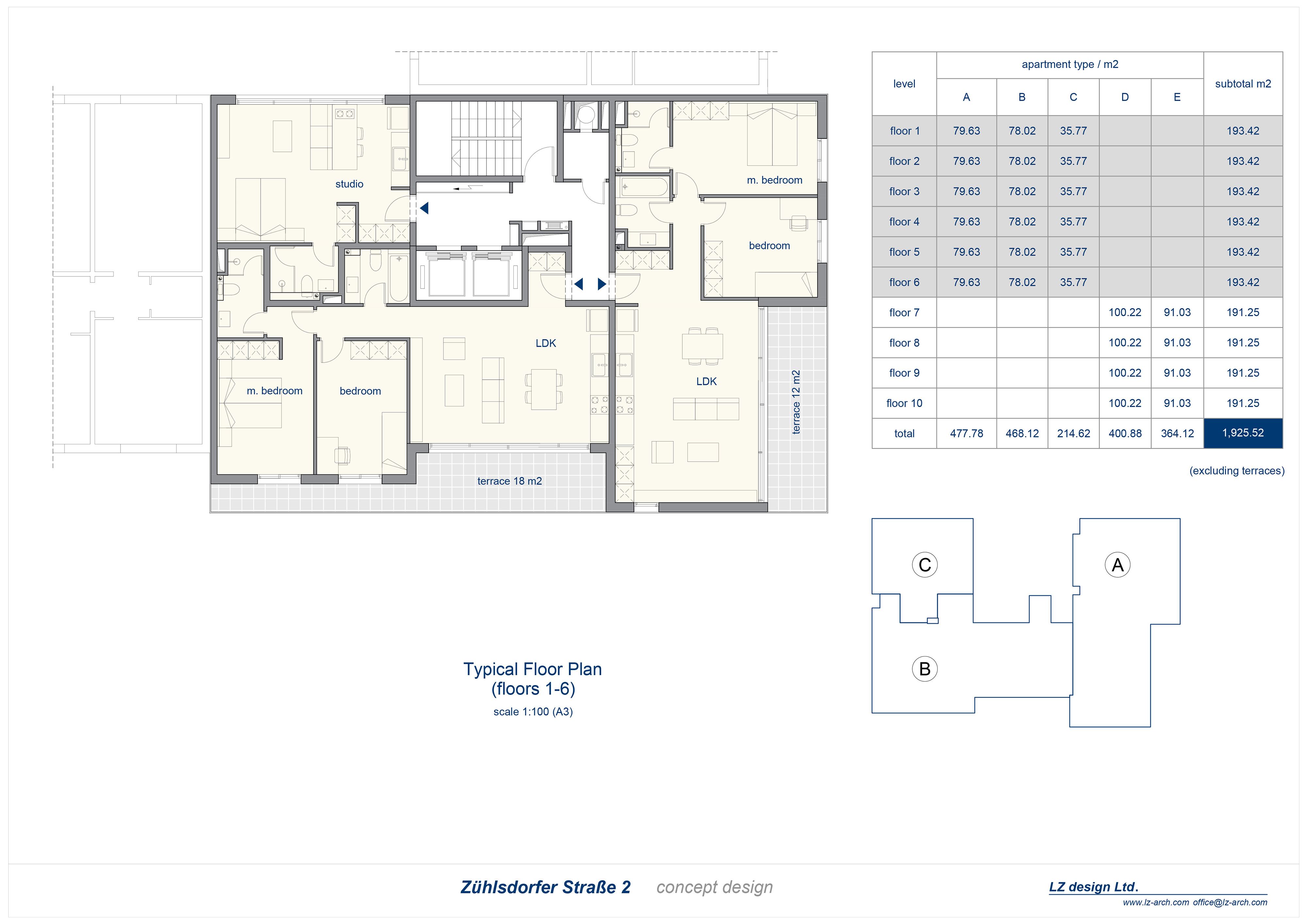
The vertical zoning of the floor plates is optimized to accommodate a diverse demographic, featuring two distinct programmatic configurations:
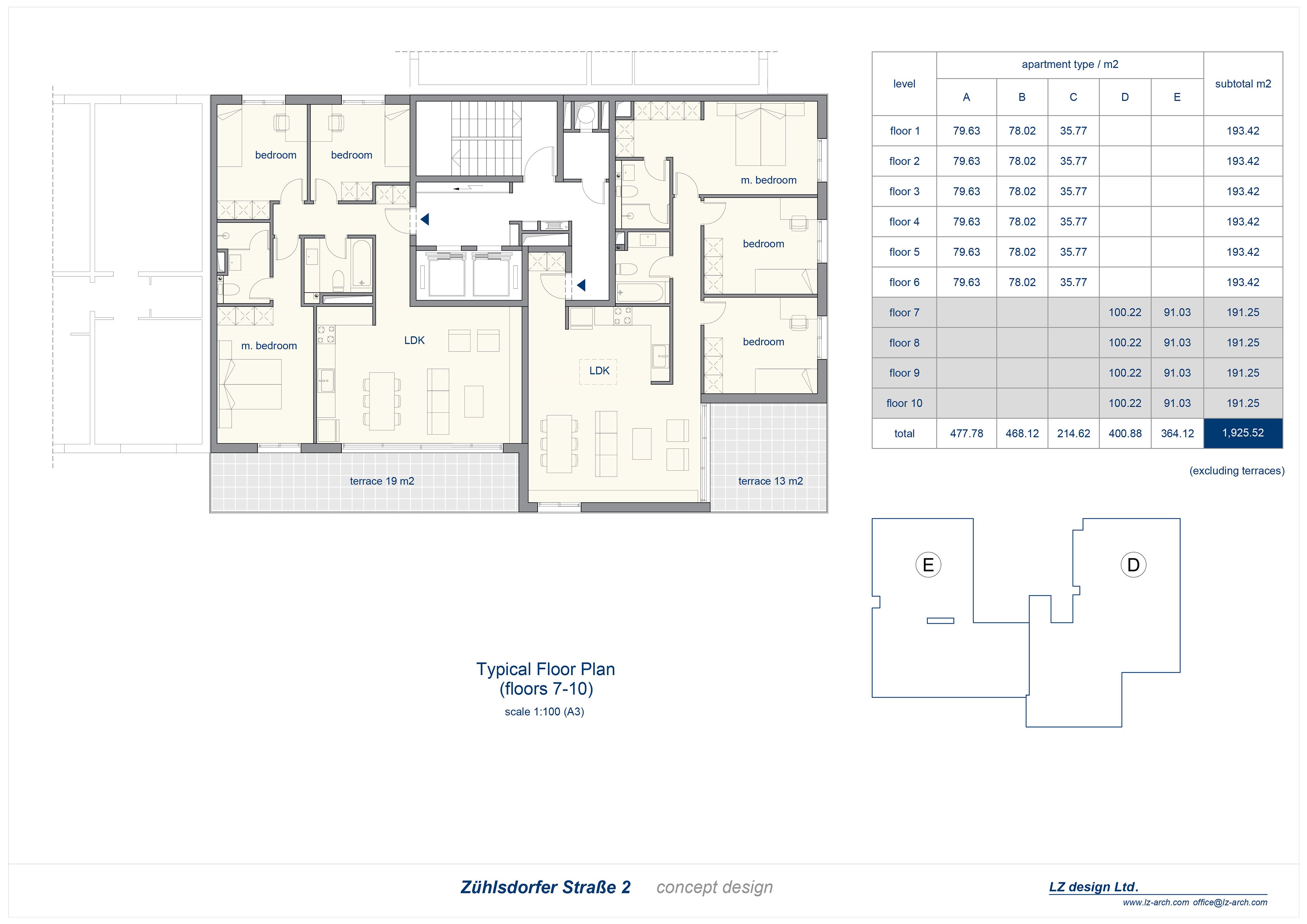
- Levels 1–6 (Mid-Density): The floor plate yields three residential units per level, comprising two well-proportioned 3-room apartments and one studio apartment.
- Levels 7–10 (Spacious Living): The upper mass transitions into a lower-density configuration, yielding two expansive 4-room apartments per floor.
Envelope, Daylighting
and Materiality
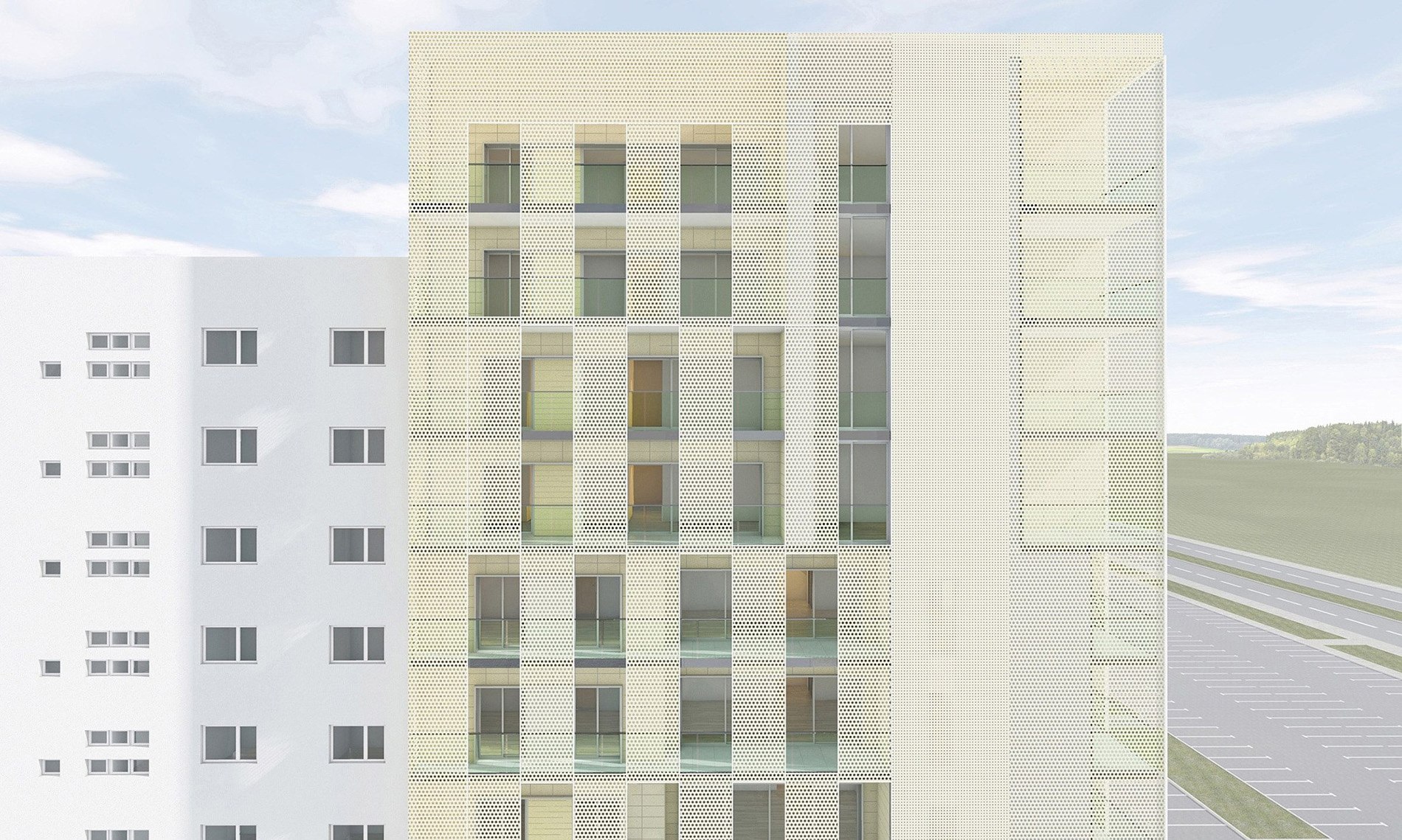
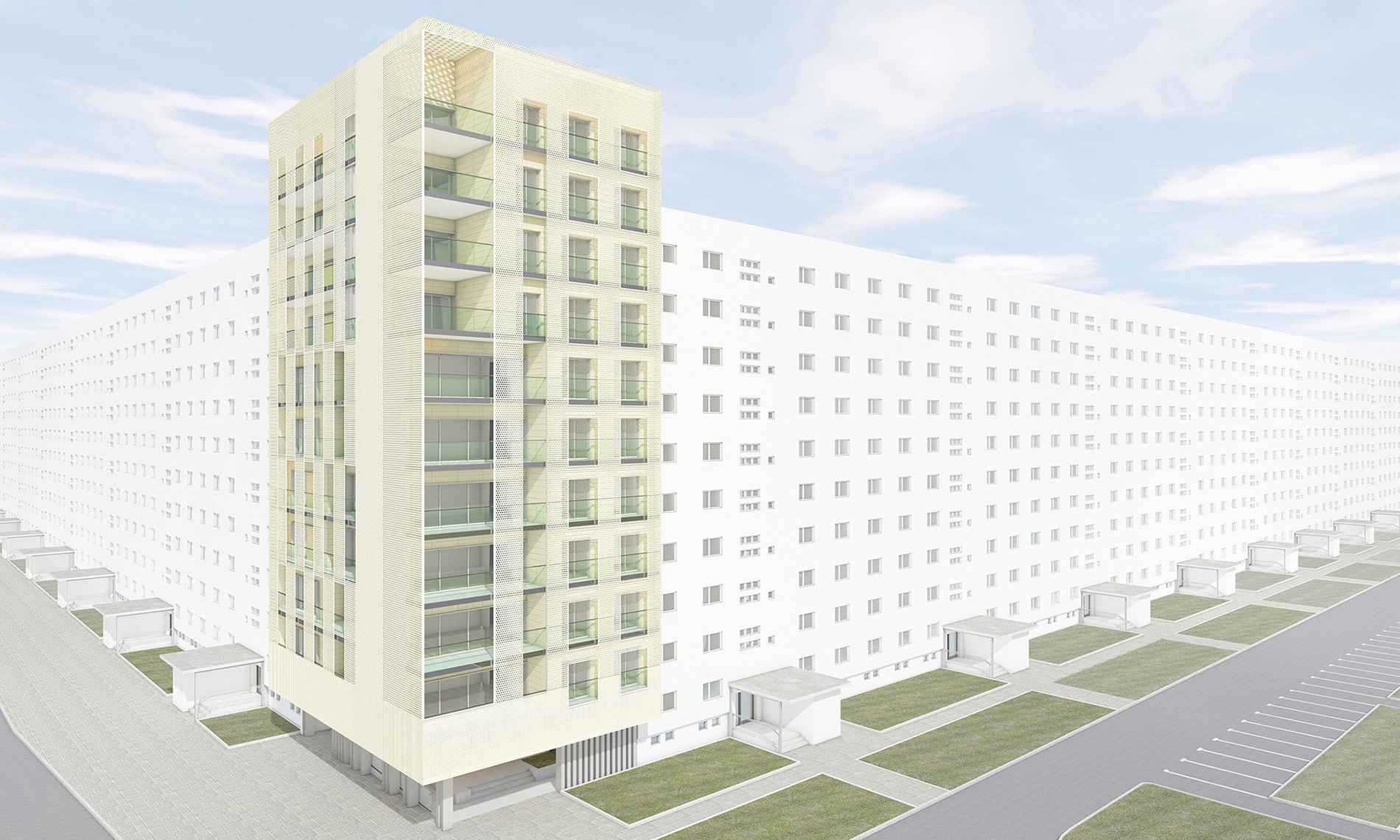
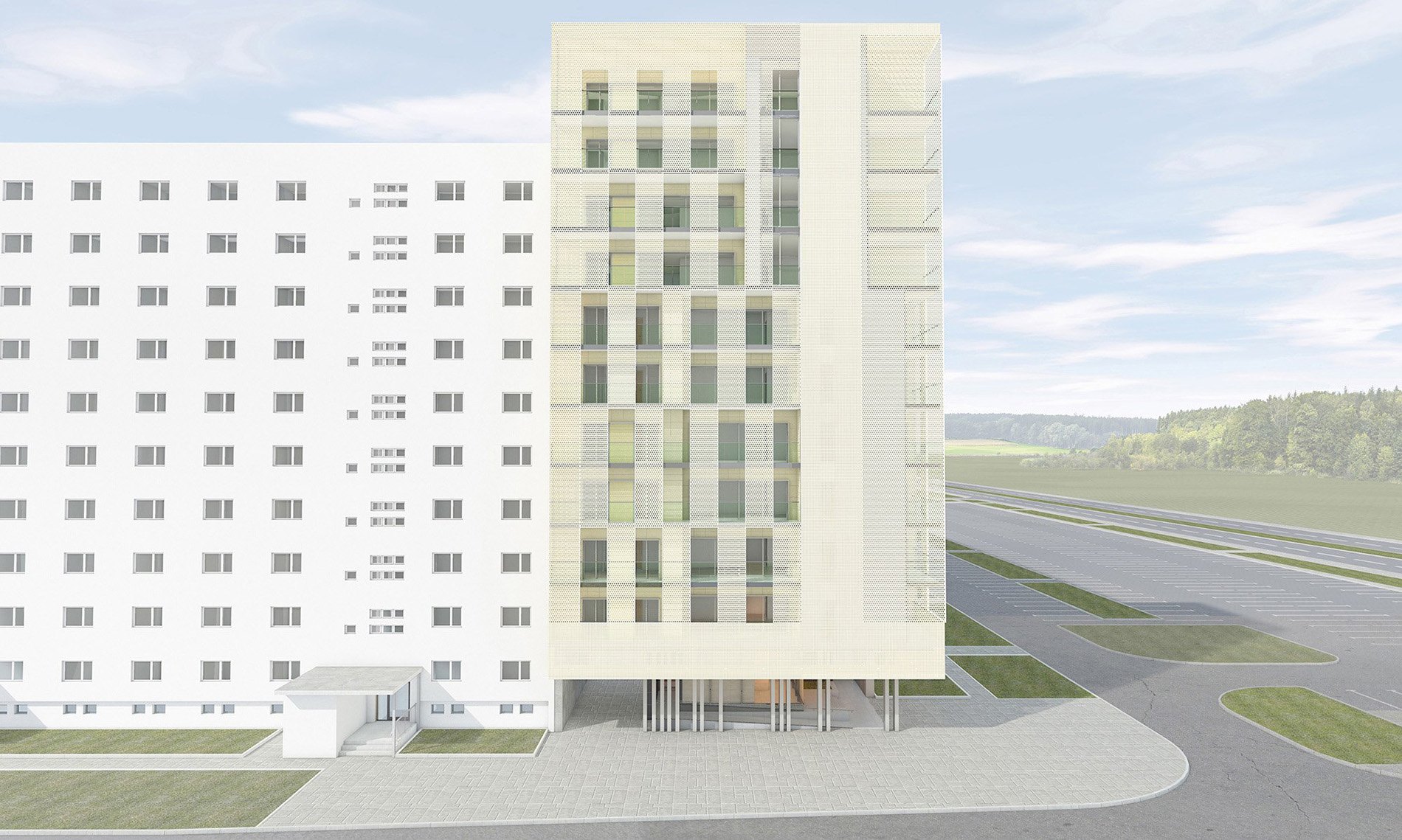
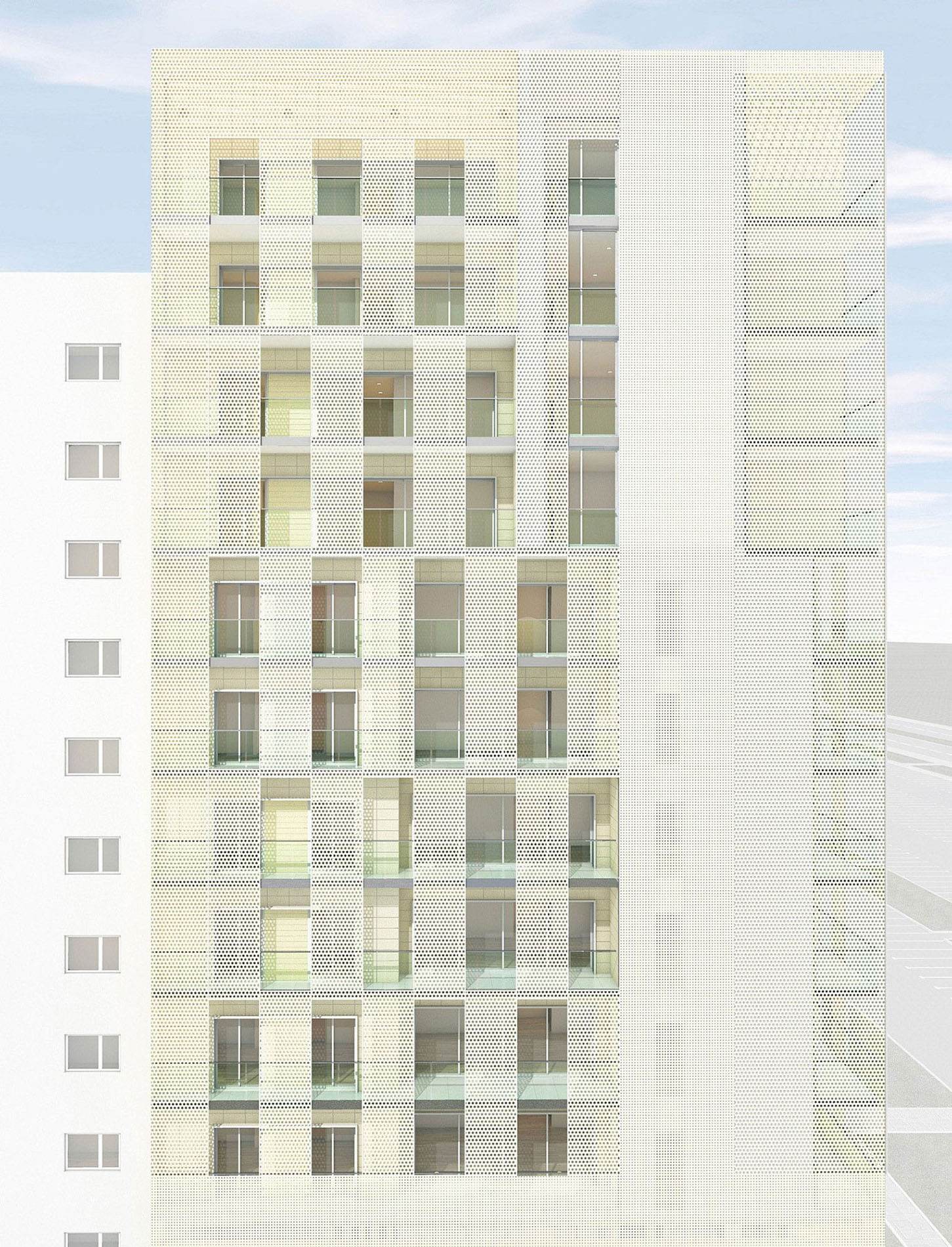
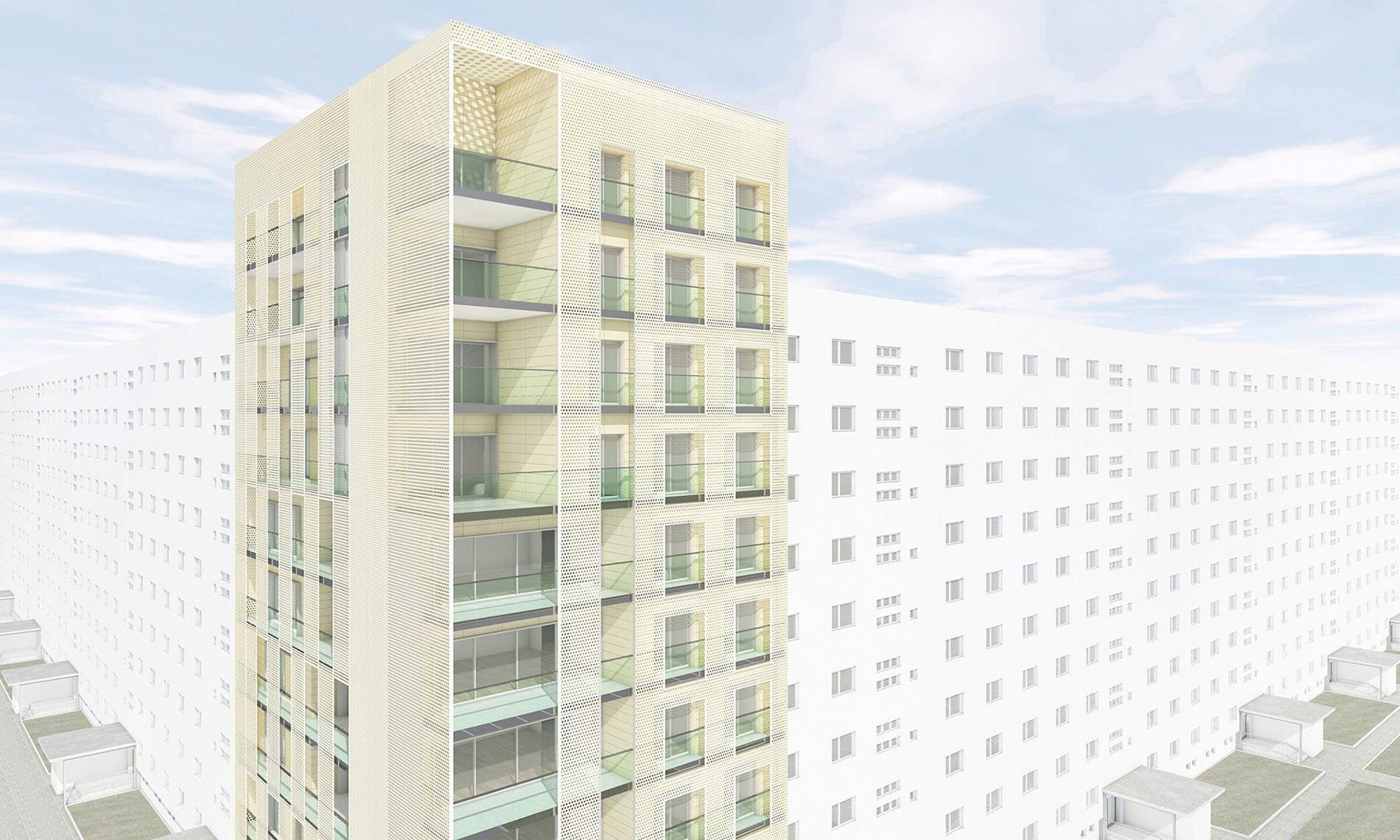
The spatial constraints of the site—specifically a limited footprint bounded by two blind party walls—necessitated an innovative approach to the facade. To overcome the inherent lack of dual-aspect, cross-ventilated unit layouts, the primary elevations are aggressively opened up. Expansive fenestration and deep, generous terraces maximize natural daylight penetration and fresh air intake.
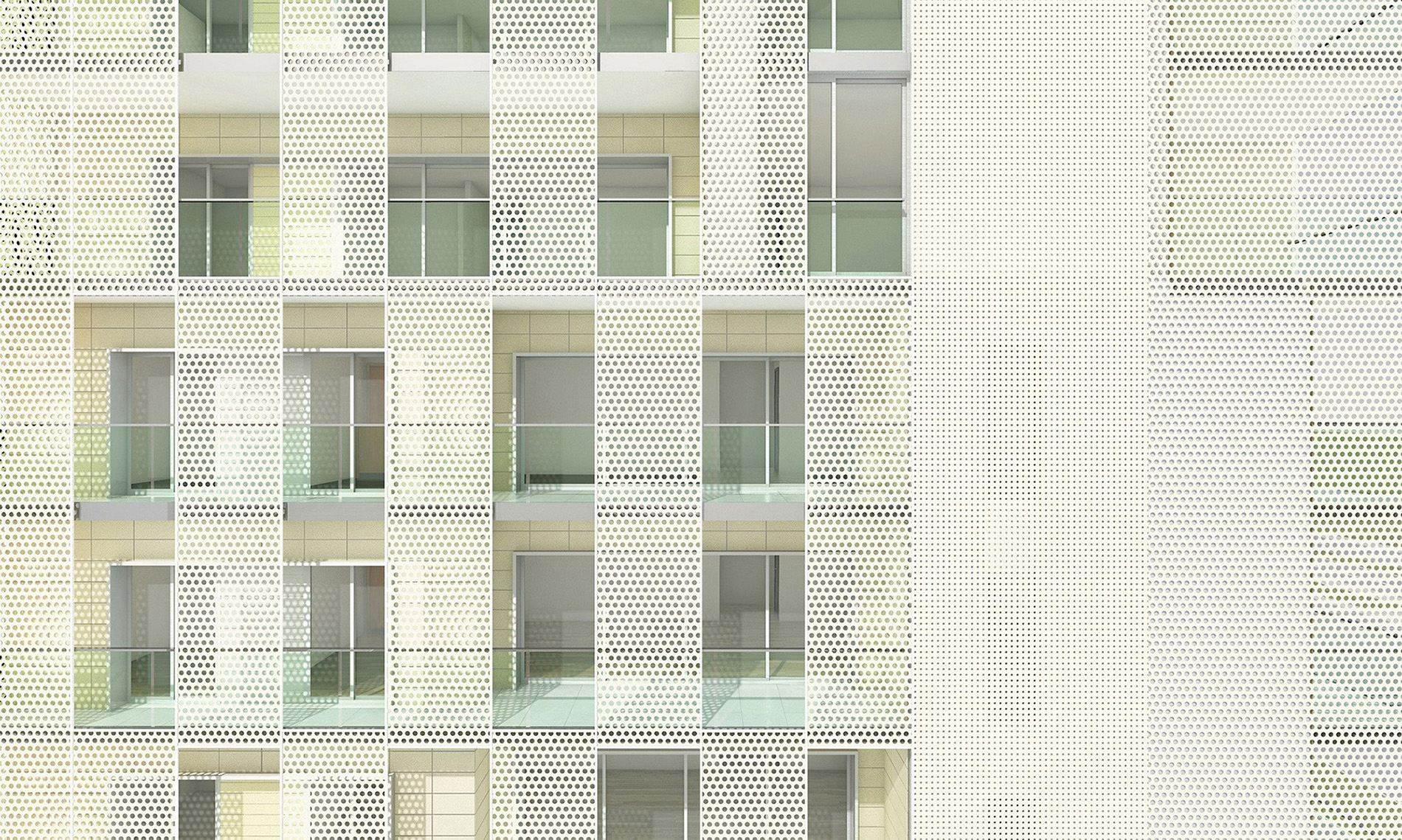
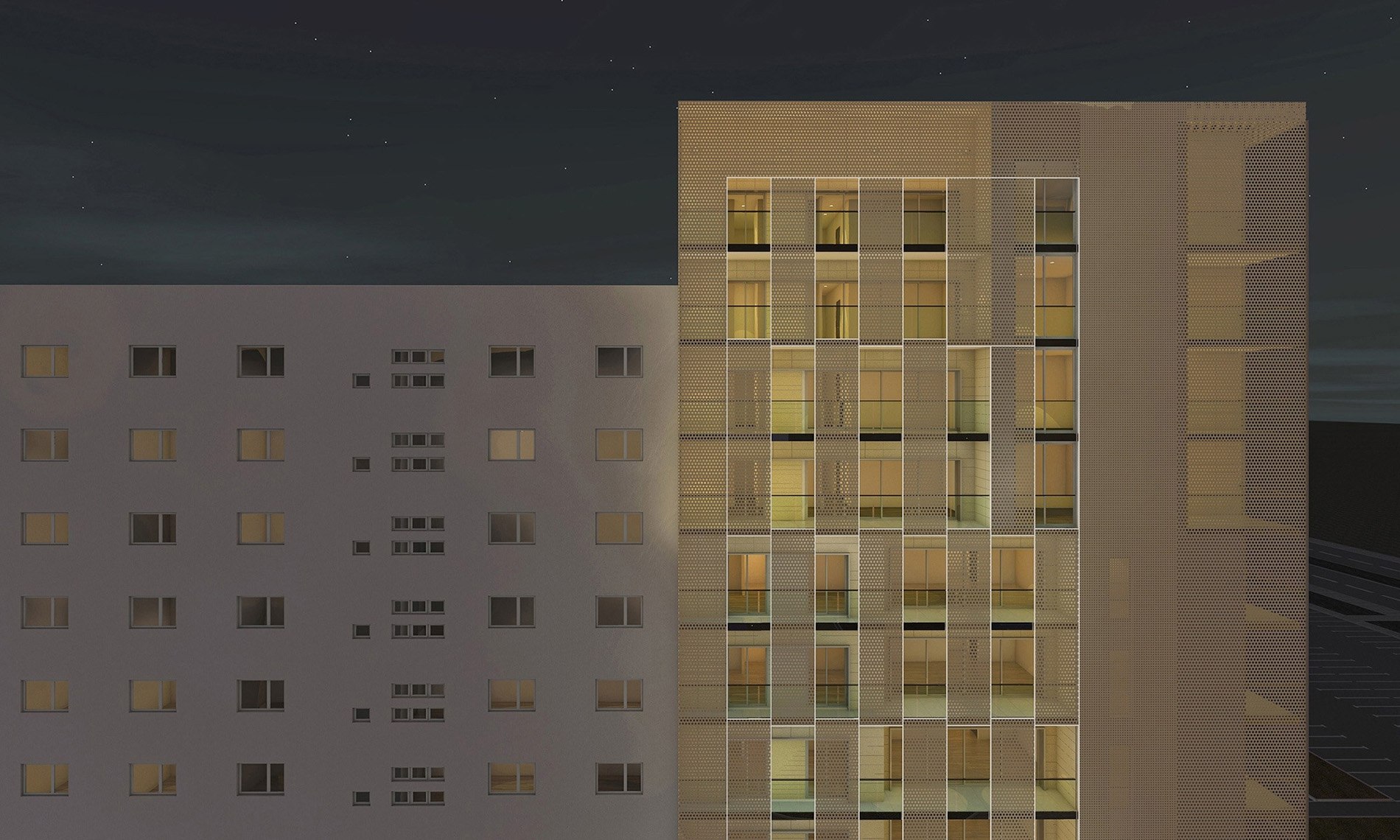
To mediate these large glazed openings, the building envelope employs a high-performance secondary skin. A sophisticated brise-soleil system—composed of 5mm thermally resistant, anti-deflection perforated aluminum panels—wraps the facade. This semi-transparent screening not only ensures domestic privacy for the residents but also serves as a critical passive environmental control, effectively mitigating excessive solar heat gain.
Symbiotic Urbanism
The conceptual framework for this project is rooted in the idea of Symbiotic Urbanism—the belief that contemporary interventions can successfully graft onto mid-century mass housing to elevate the entire urban context. The design philosophy is driven by three core principles:
Contextual Respect via Contrast
Rather than mimicking the parent QP-71 structures, the building establishes a dialogue through deliberate, contemporary contrast. By serving as a rhythmic punctuation mark in a 190-meter monolithic facade, the architecture respects the history of the site while confidently asserting its own modern identity, giving legibility and human scale back to the streetscape.
The Permeable Ground Plane
Architecture should not act as a barrier. By lifting the primary mass and reducing the basement footprint, the design honors the existing flows of the neighborhood. The resulting piloti-style ground floor acts as a welcoming, porous threshold rather than a wall, ensuring the internal courtyard remains an accessible, breathing community asset.
Light as a Spatial Material
In urban infill, natural light is the ultimate luxury. Bounded by two blind party walls, the design treats the remaining facades as hyper-active environmental filters. The architecture balances the aggressive pursuit of daylight and natural ventilation—achieved through deep terraces and enlarged glazing—with the psychological need for refuge. The 5mm perforated aluminum veil acts as the project’s signature, simultaneously cooling the building, ensuring resident privacy, and glowing like an urban lantern at night.
|